Import New Assets
In this guide, you’ll learn how to bulk import assets, which is recommended when you need to add multiple assets efficiently.
AssetLoom allows you to create new assets in two ways:
- Bulk Import: Upload multiple assets at once via CSV file.
- Manual Setup: Create assets individually by filling out the Asset Creation Form.
- From the left-side menu, go to Resources -> Assets. This will open the Assets page, where all assets are listed.
- On the top-left corner of the page, click the New Item dropdown, then select Import from the dropdown menu. This will initiate the bulk import process.
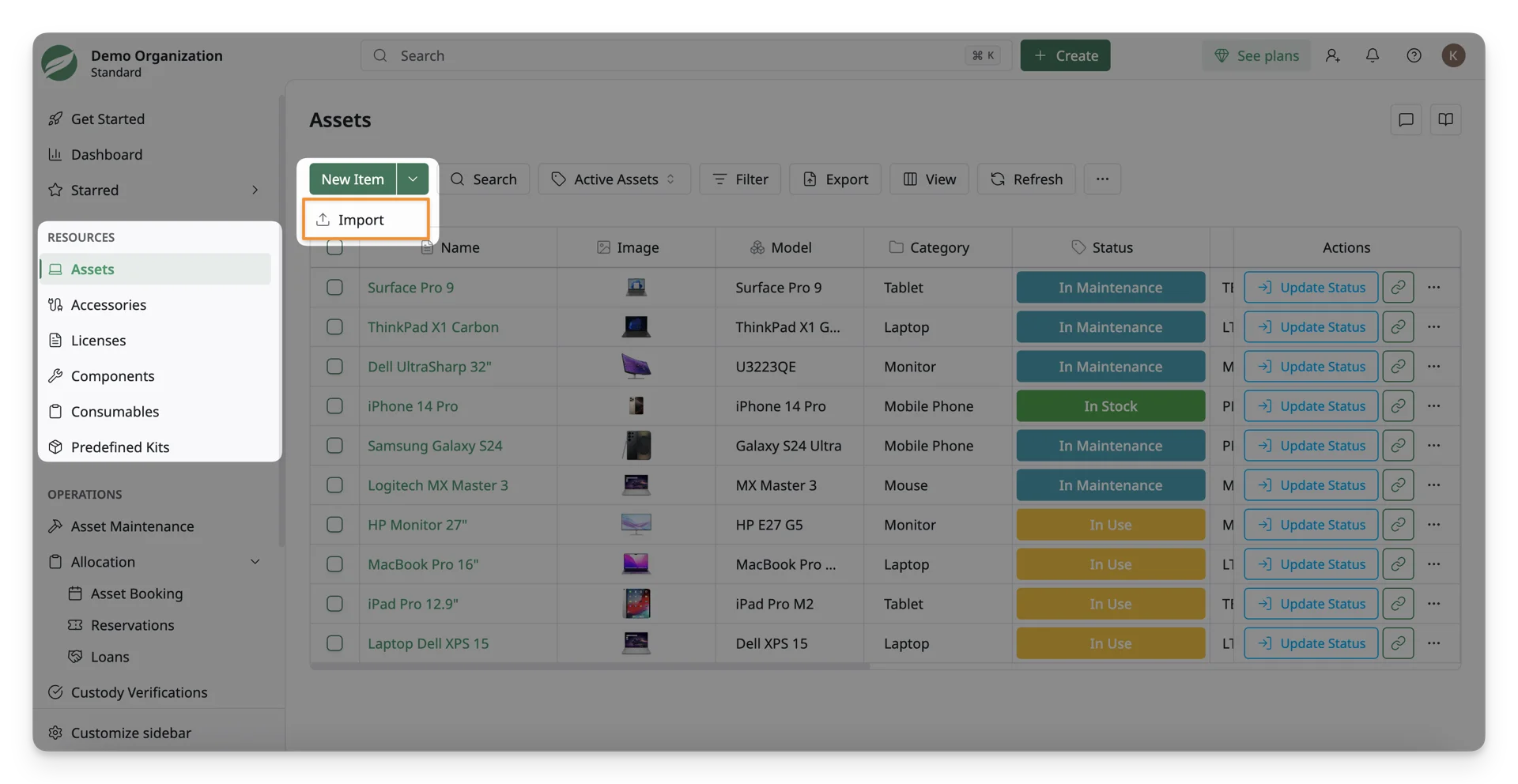
After selecting Import, the Import Data window appears, guiding you through the steps to prepare and validate your data for importing assets into AssetLoom.
Step 1: Upload File
AssetLoom supports asset import using a CSV file.
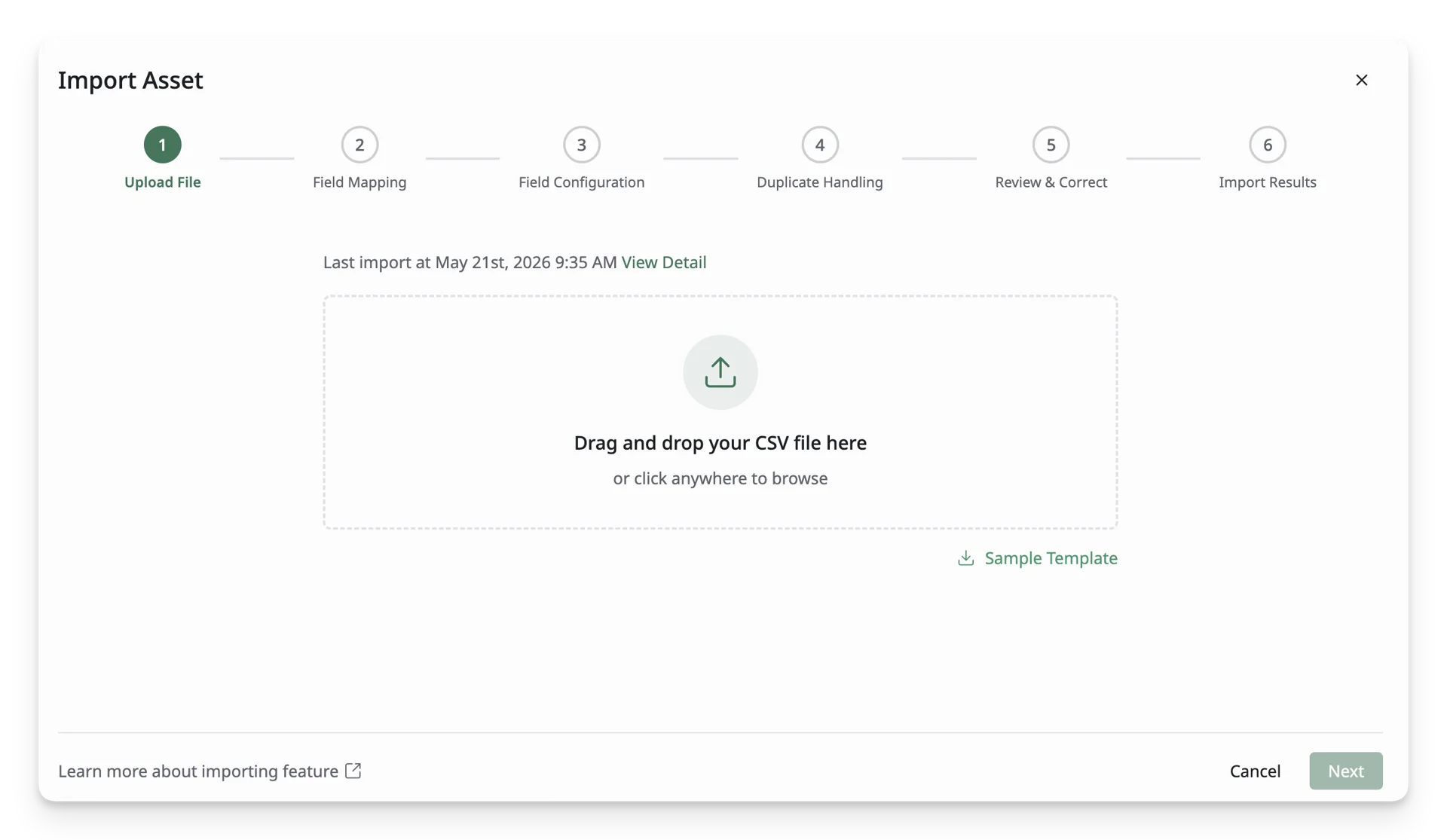
- Upload your file by either:
- Dragging and dropping the CSV file into the upload area, or
- Clicking the upload area to browse and select your file.
- If you do not have a prepared file, click Sample Template to download a reference template. Use this template to understand the required format and structure of the data before importing.
Learn about Data Validation Rules for Import
Before continuing with the new import, you can review your previous import status:
On the Import Data page, the system will display the last import status under the Upload File section.
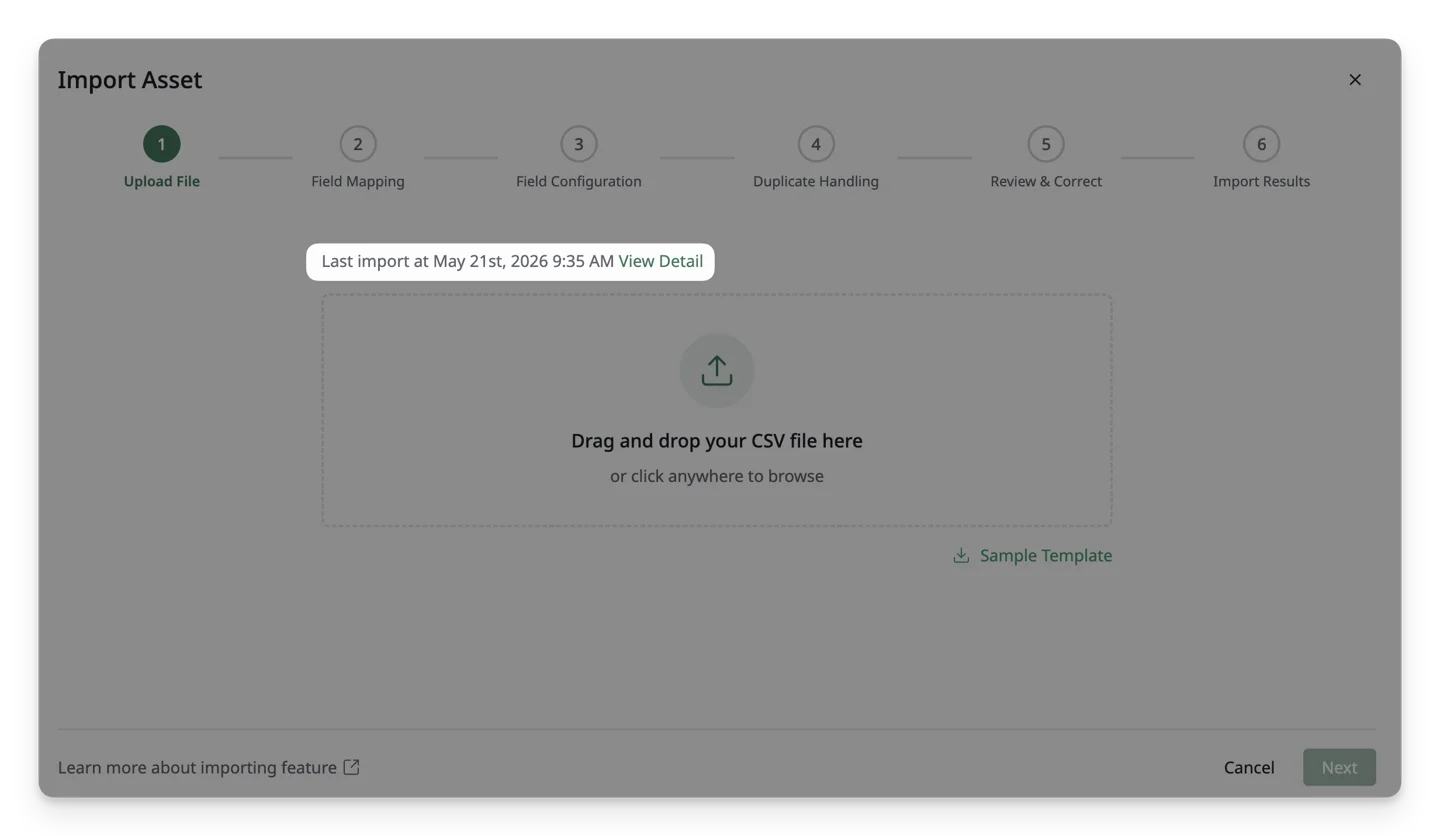
You can also view additional details for the last import by clicking “View Details”, including:
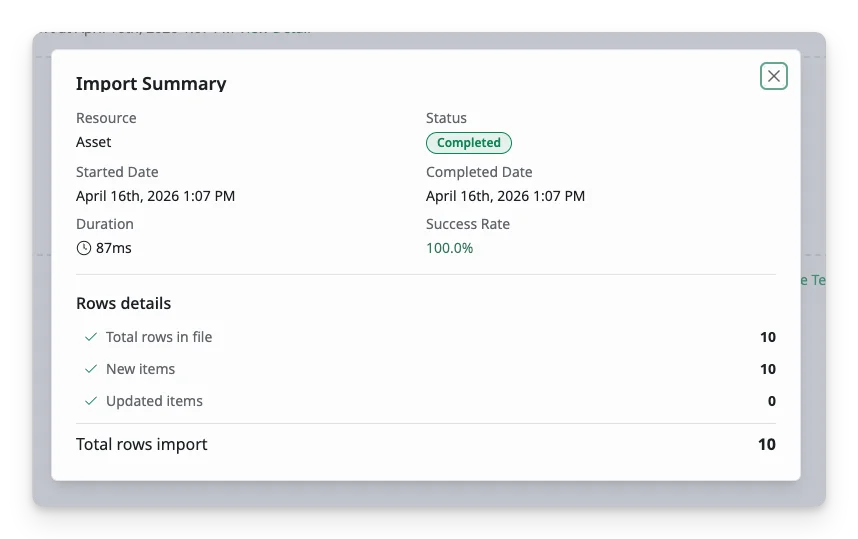
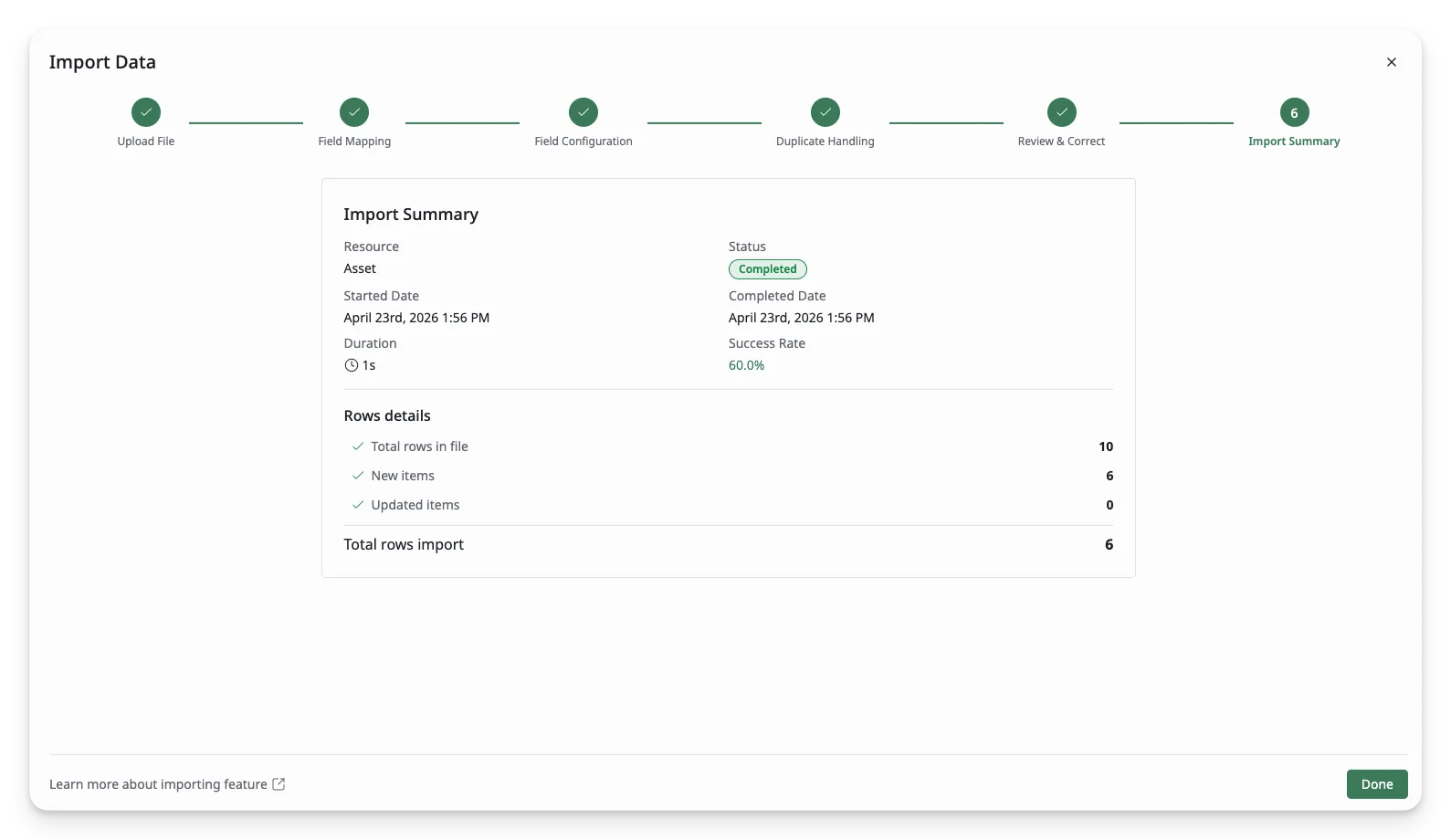
Import Results
- Resource Type: The type of data being imported (e.g., Assets).
- Import Status: The current state of the import process-
- Queued: The import is waiting to start
- Pending: The import is in progress
- Completed: The import finished
- Failed: The import did not complete
- Started At / Completed At: The date and time when the import process began and when it finished.
- Duration: The total time taken to complete the import process.
- Success Rate: The percentage of rows that were successfully imported, which is calculated based on valid rows compared to total rows processed.
Import Breakdown
- Total Rows in File: The total number of rows detected in the uploaded CSV file.
- New Items: The number of new assets created during the import.
- Updated Items: The number of existing assets that were updated during the import.
- Total Rows Imported: The total number of rows successfully processed, including both newly created and updated items
Step 2: Field Mapping
In this step, you map the columns from your CSV file to the corresponding fields in AssetLoom.
AssetLoom will attempt to automatically map columns based on matching names. Review these mappings and adjust them if necessary.
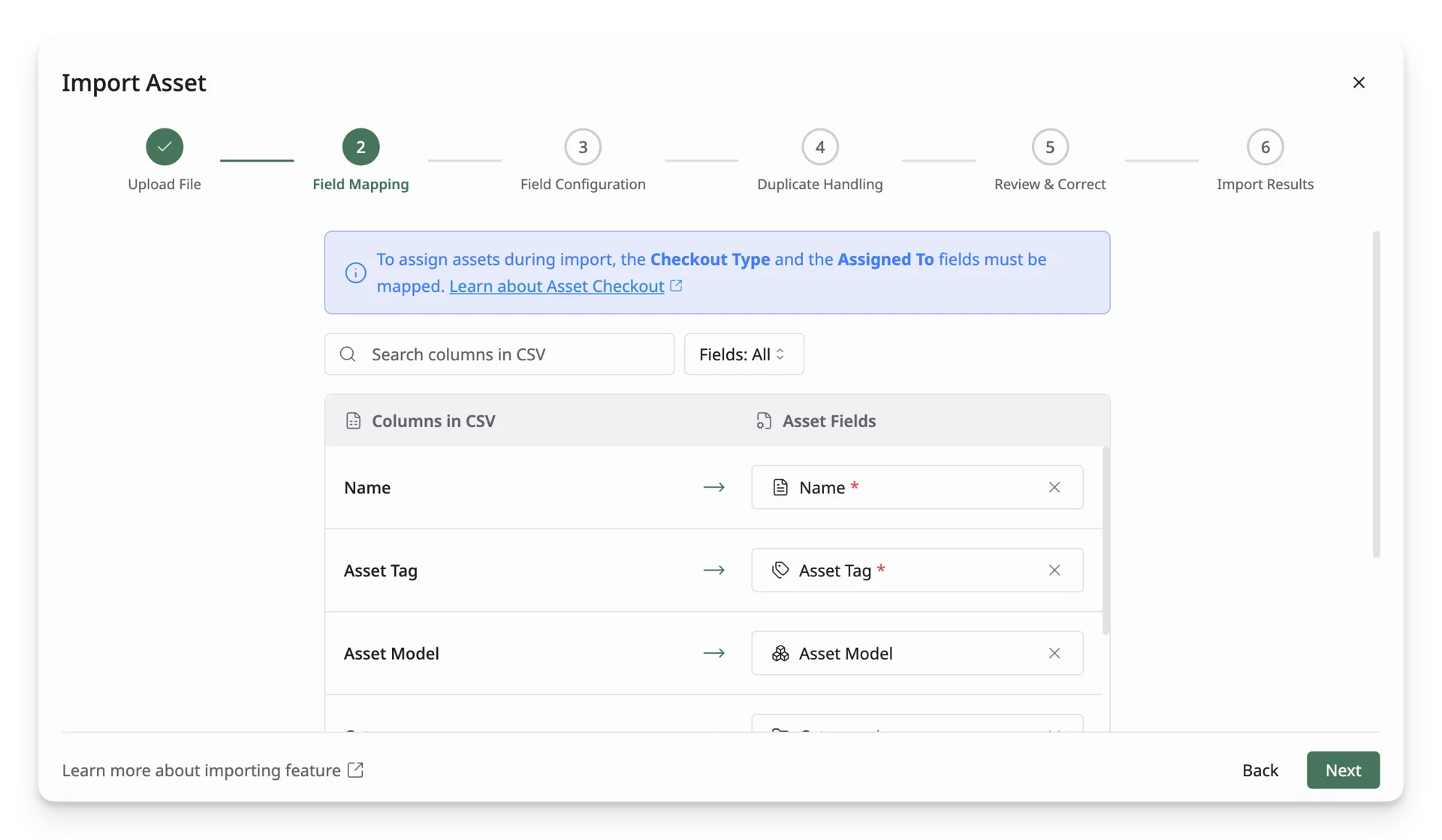
To map fields:
- For each column in your CSV file, select the corresponding AssetLoom field.
- Ensure all required fields are correctly mapped before proceeding.
To assign assets during import, both of the following fields must be mapped:
- Checkout Type: Specifies the type of assignment target (User, Asset, or Location)
- Assigned To: Specifies the name of the assignment target (e.g., user name, asset name, or location name)
Step 3: Data Configuration
In this step, you will configure settings for the imported data. These configurations ensure that AssetLoom applies the correct format and rules to your data before it is processed.
Asset Tag Format
AssetLoom allows you to auto-generate asset tags for assets that are missing asset tags in your CSV file during the import.
If your CSV file already contains asset tags, AssetLoom will use those provided tags first. Only assets without tags in the file will have their tags auto-generated.
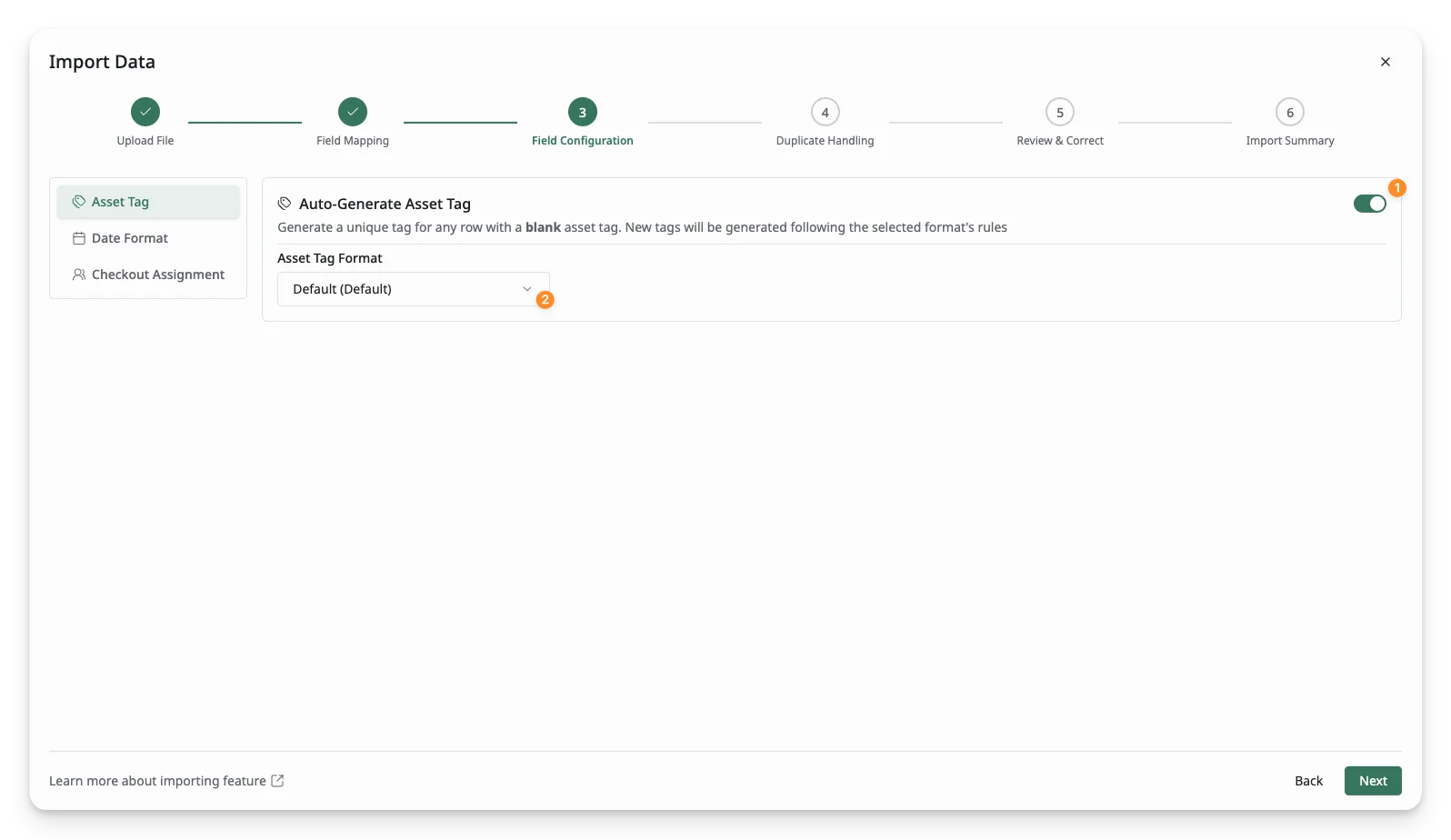
- Enable Auto-Generate Asset Tag: Toggle this ON to enable auto-generating tags for assets without an existing asset tag in your file.
- Asset Tag Format: Choose the format for generating new asset tags. AssetLoom will follow the selected format and assign a unique tag to any asset missing one.
Date Format
Click on the dropdown and select the date format to use for your data. This setting ensures that the dates in your CSV file are interpreted correctly by AssetLoom.
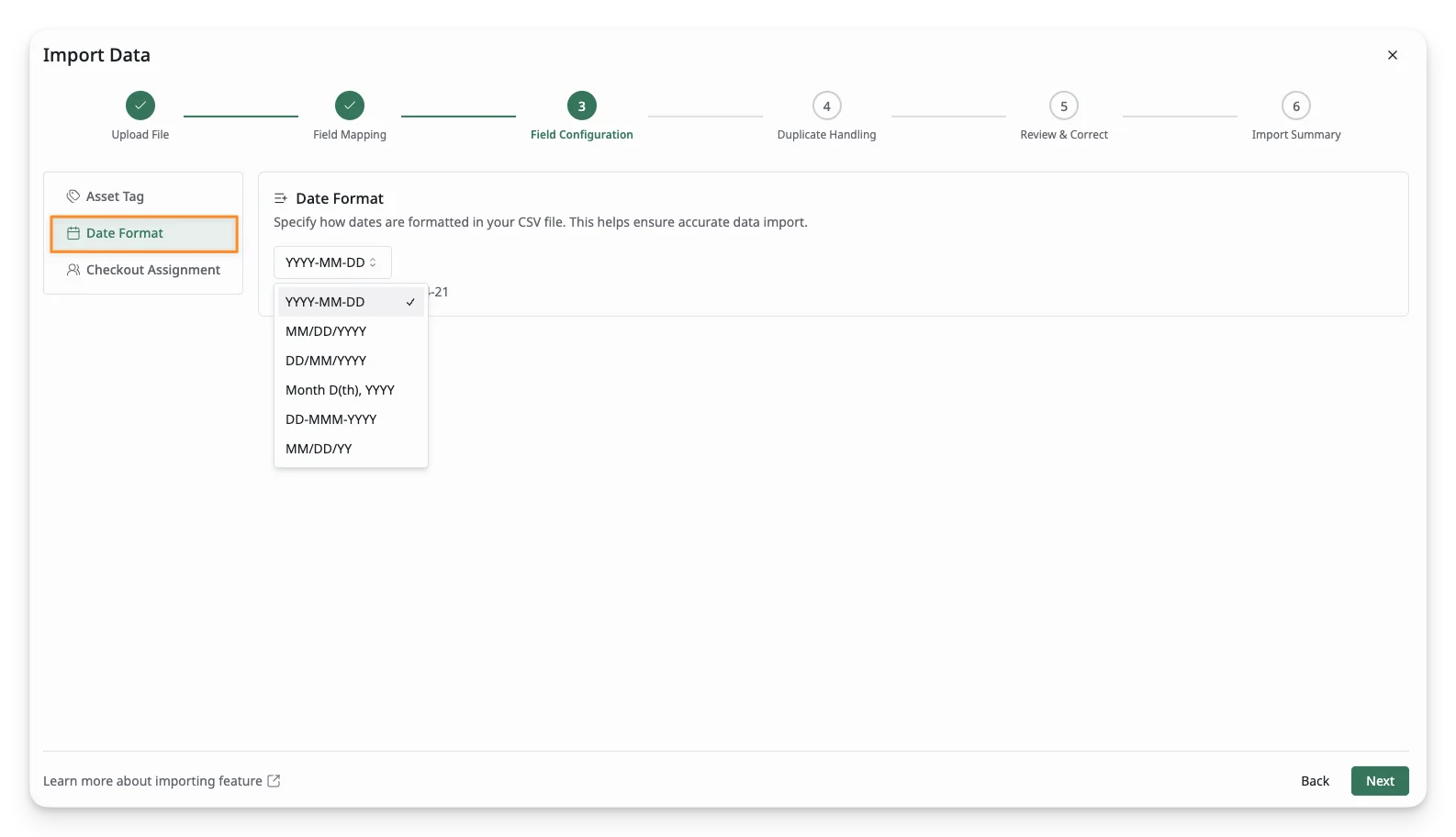
Available Format:
- YYYY-MM-DD (e.g., 2026-04-21)
- MM/DD/YYYY (e.g., 04/21/2026)
- DD/MM/YYYY (e.g., 21/04/2026)
- Month D(th), YYYY (e.g., April 21st, 2026)
- DD-MMM-YYYY (e.g., 21-Apr-2026)
- MM/DD/YY (e.g., 04/21/26)
Checkout Target:
The Checkout Target section allows you to map the values from your CSV file to AssetLoom’s Checkout Type and Assigned To fields. This ensures that each asset is assigned correctly during the import.
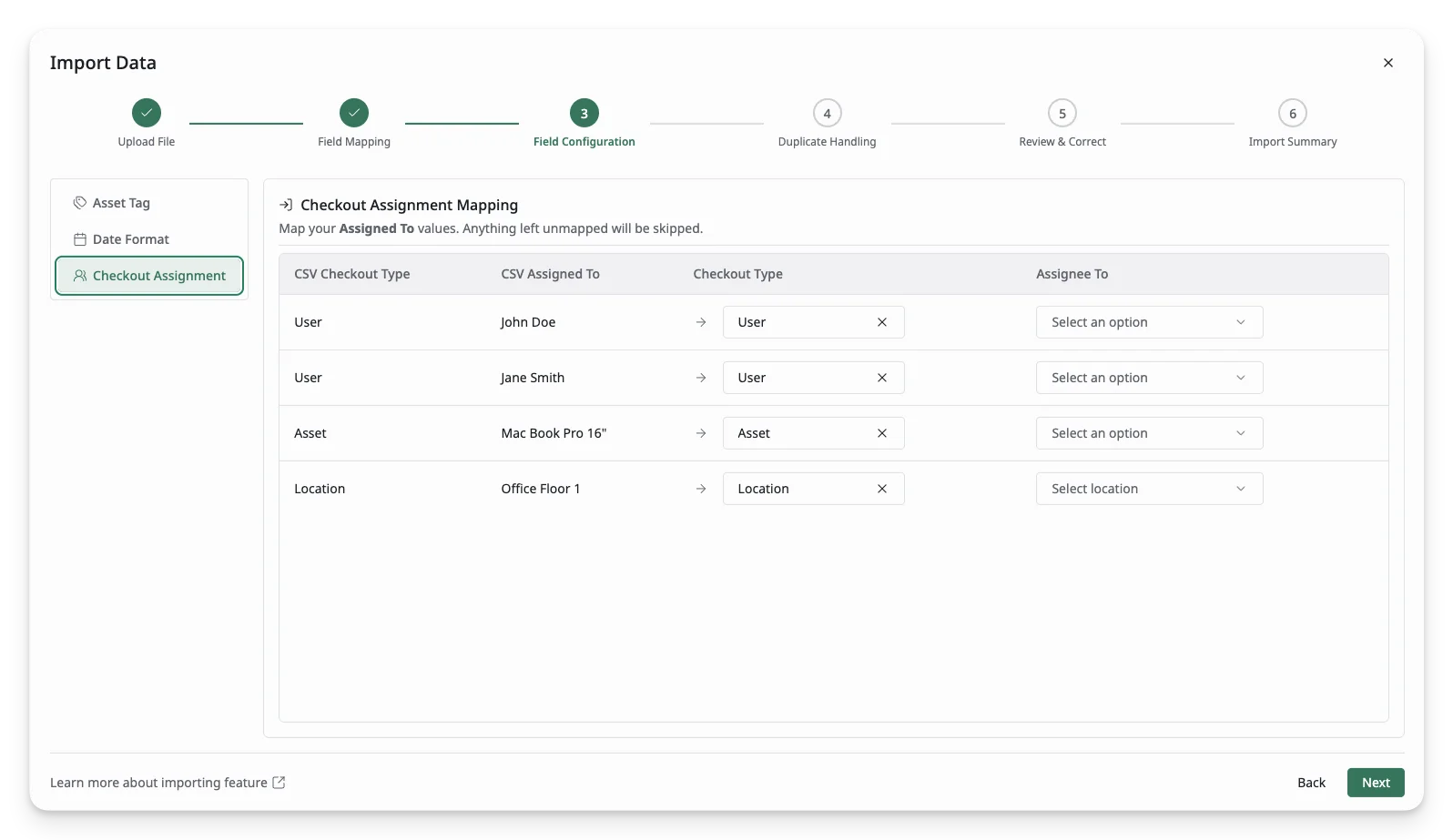
Before mapping the Checkout Target (Assigned To), ensure the following data is already added:
- Members: Ensure users are added to the instance so assets can be assigned to them.
- Asset Data: Add the assets to be assigned, as they may be assigned to other assets.
- Location Data: Make sure location information is included for assets that need to be assigned to a location.
This ensures the correct mapping of Assigned To during the import process.
To map values, simply click on the dropdown next to each row to map the correct value from your CSV to AssetLoom’s system.
- Checkout Type: This field determines the type of checkout for each asset, such as:
- User: Assigning to a user
- Asset: Assigning to another asset
- Location: Assigning to a location
- Assigned To: This field identifies who or what is being assigned, based on the Checkout Type. You will map the appropriate value to this field (e.g., User name, Asset name, Location name).
If the Checkout Type or Assigned To fields were not mapped in Step 2, you can still proceed with the import without assigning values or restart to map the necessary fields.
Step 4: Duplicate Handling
In this step, you will choose how to handle assets that already exist in the system but are also present in your CSV file.
Duplicates are determined based on matching Asset Tags. If an asset in your CSV file has the same Asset Tag as one already in the system, it will be considered a duplicate.
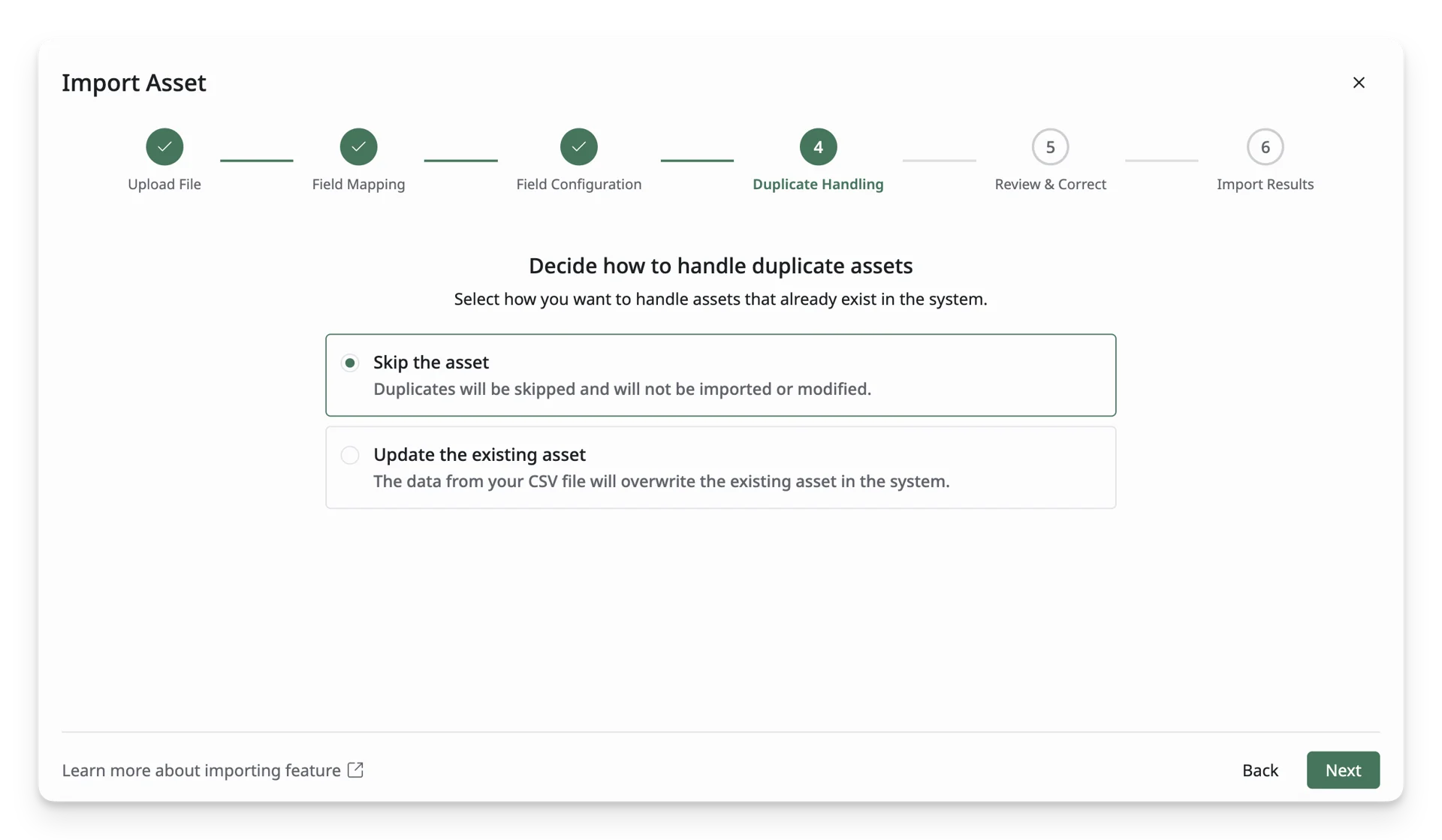
You have two options for handling duplicates:
- Skip the asset and do not import: Any assets with duplicate Asset Tags will be skipped and will not be imported or modified in the system.
When to use: Choose this option if you do not want to update existing assets and prefer to skip importing any duplicates.
- Update the existing asset: The data from your CSV file will overwrite the existing asset in the system.
When to use: Select this option if you want to update existing assets with the latest information from your CSV file.
Step 5: Review & Correct
In this step, you will review the assets that were imported and correct any errors.
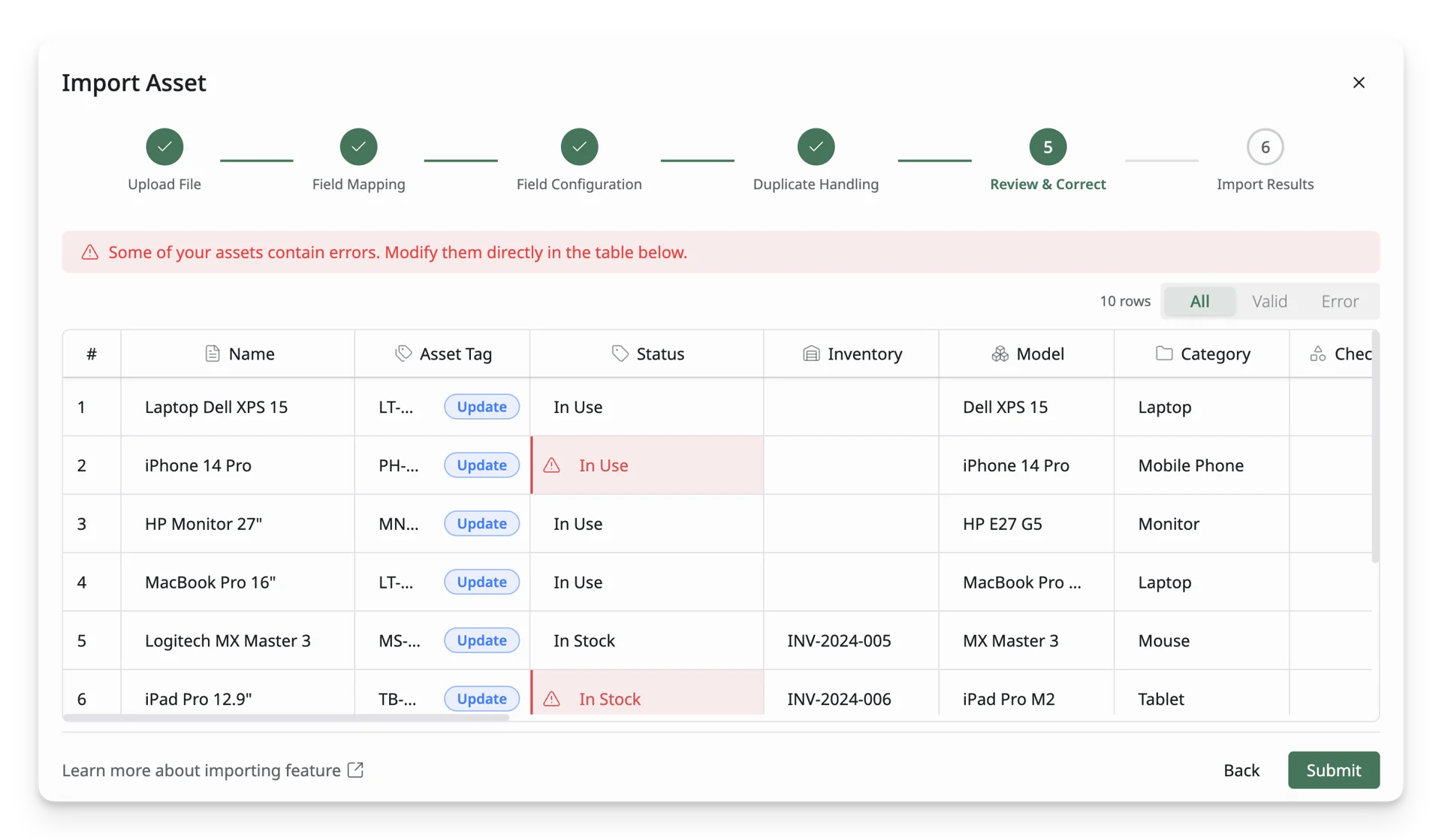
- Error Filtering: You can filter the list to view error, valid, or skipped assets. This allows you to focus on the assets that need attention.
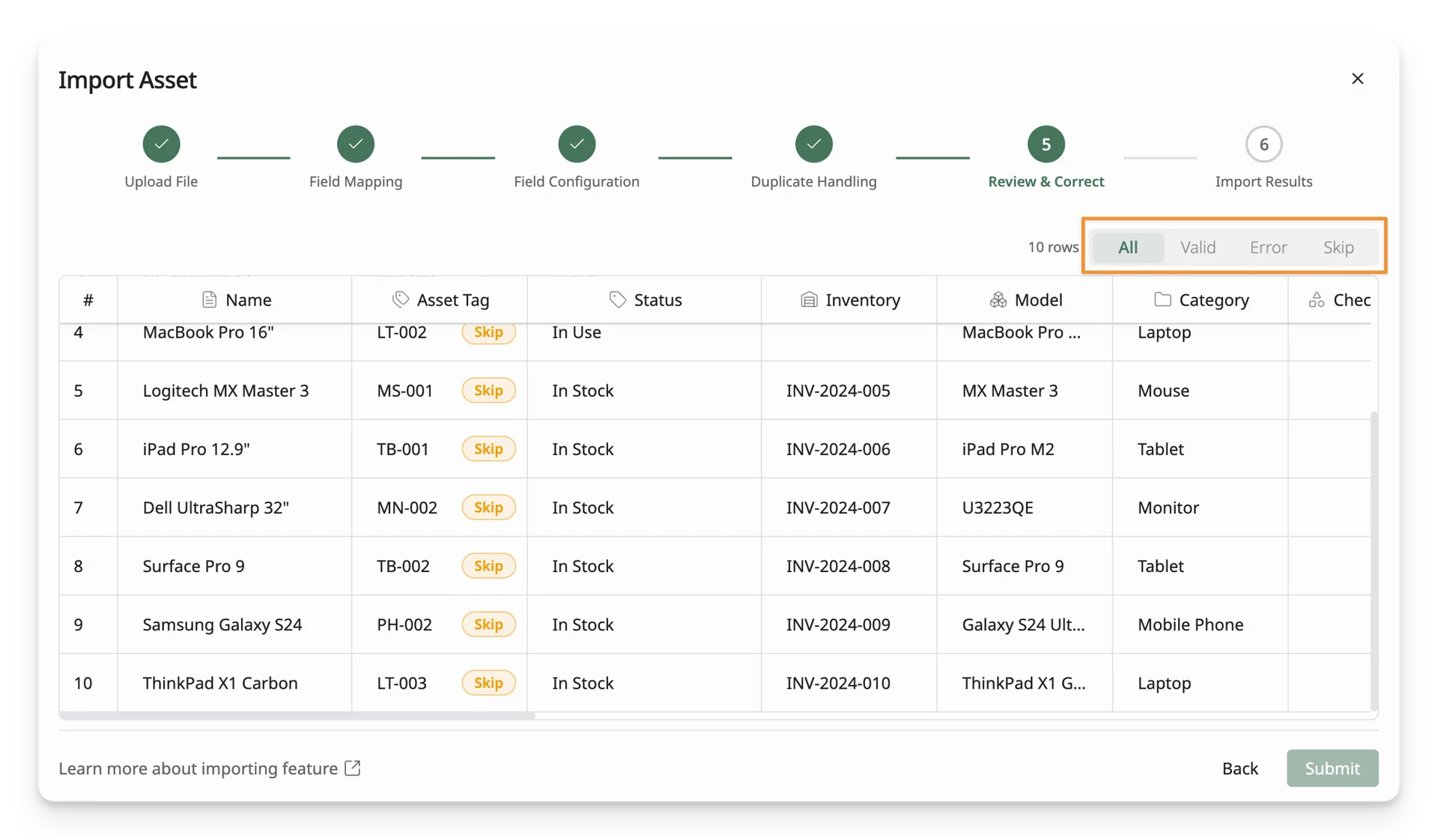
- Error Details: Hover over the error icon to view more details about why the asset is marked as an error.
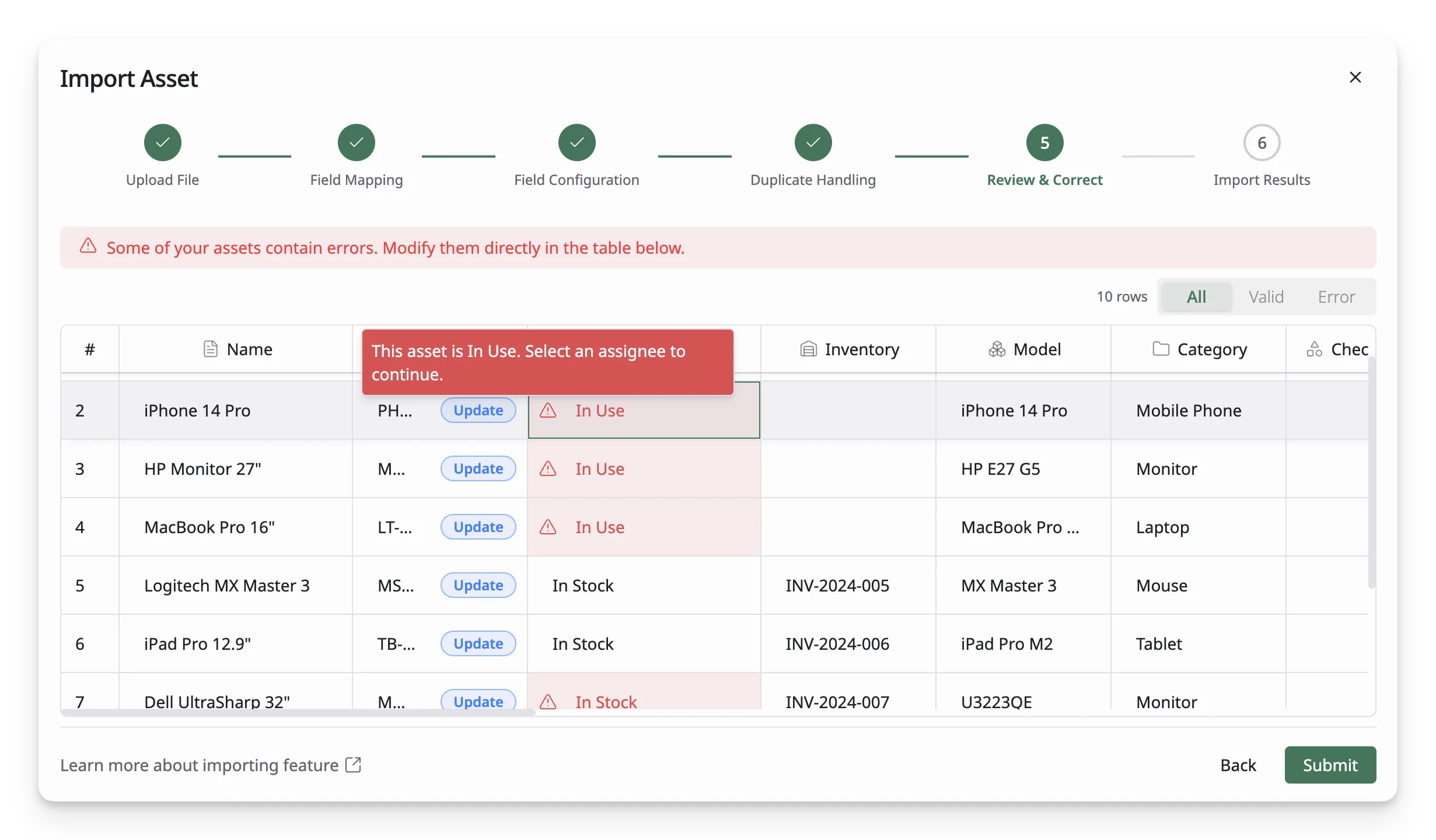
- Edit Values: To correct an error, simply double-click on the value in the cell to modify it. Once you’ve made the necessary changes, the asset will be re-validated automatically.
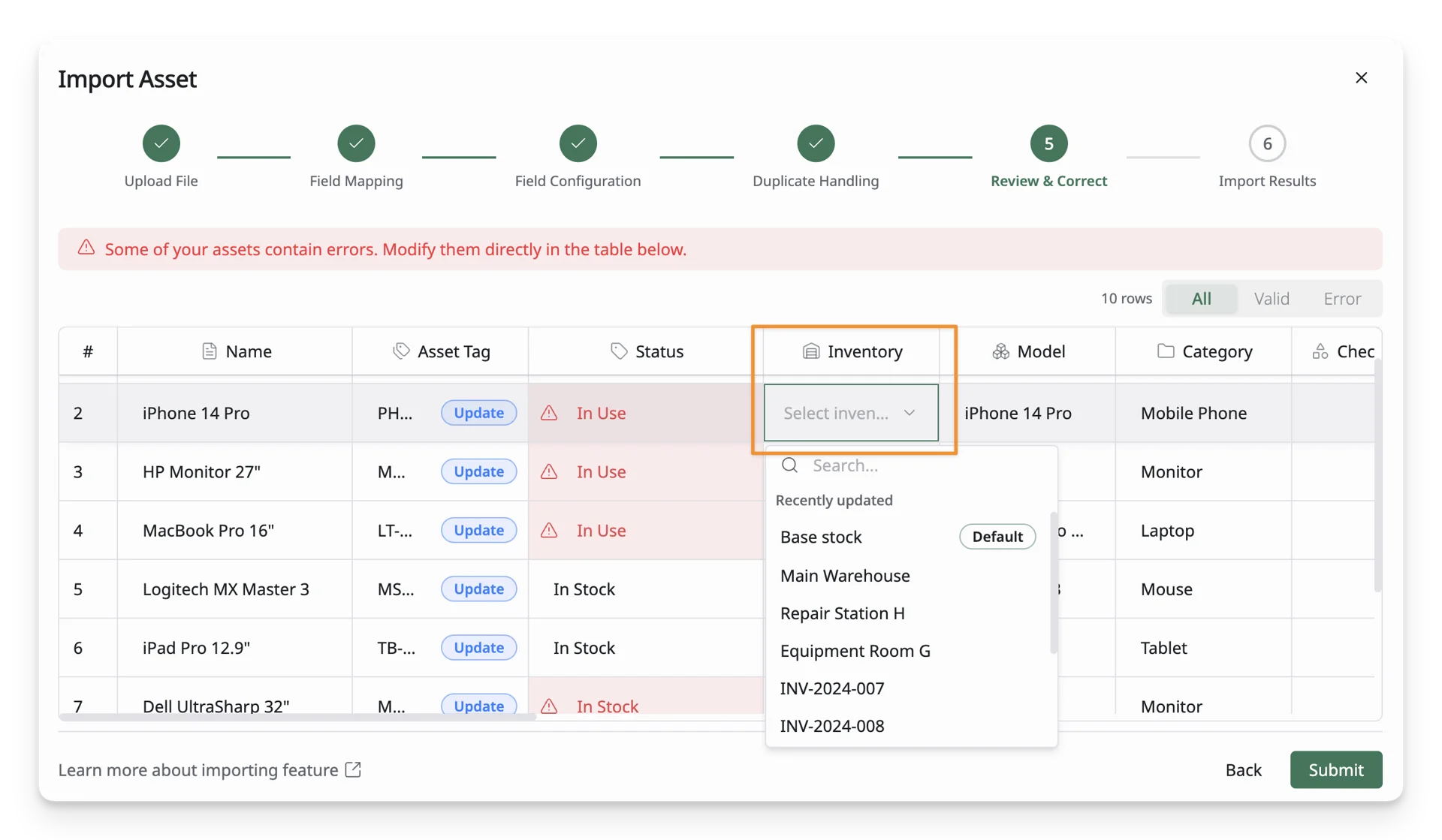
After reviewing and correcting the errors, click Submit to proceed to the final step.
Learn about Common Errors During Import and How to Fix Them
Step 6: Import Results
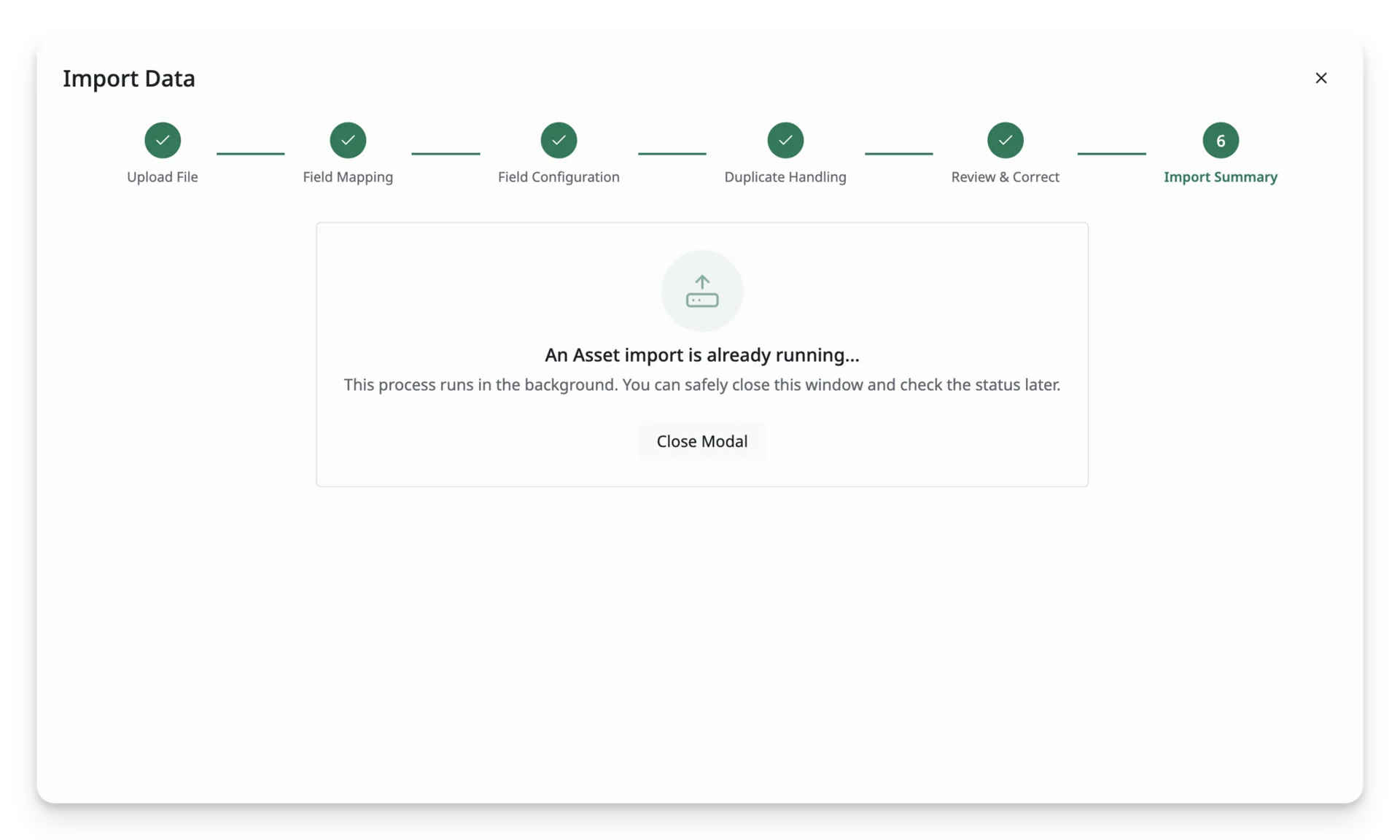
After submitting the final version of your asset data, AssetLoom will process the import. The duration will depend on the size of your file. You can close this window and check the status later.
Once the import is complete, you’ll be able to view the results immediately or in the Import Details section (refer to Step 1 for Last Import Results).
After a successful import, your asset list will be updated.
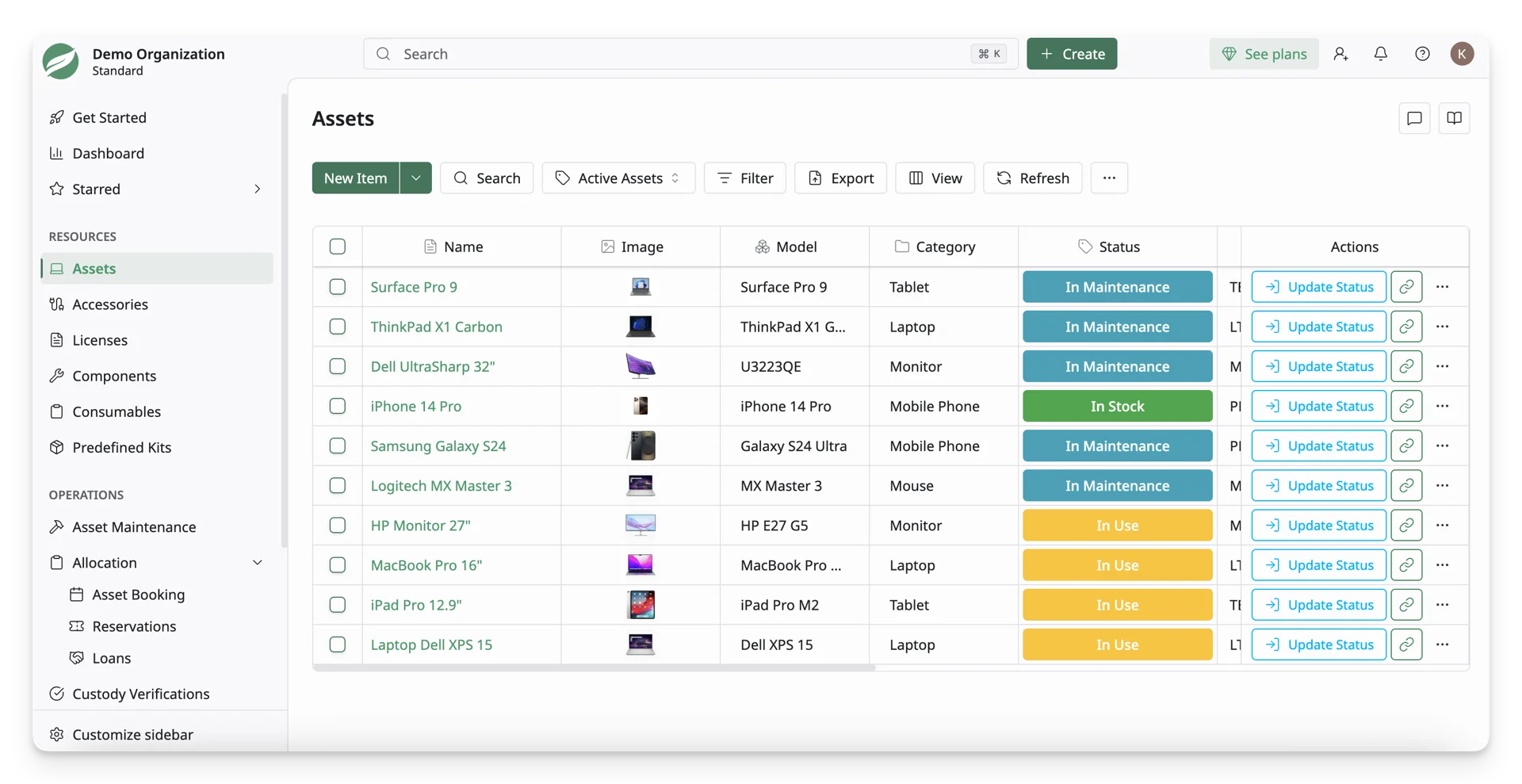
Click Refresh to load the latest data.
What’s Next?
- Manage Asset Details: View details of each asset
- Manage Asset Status: Track and manage assets by status