The Component List
Explore the AssetLoom Component List to manage your components
The Component List is located under the Resources dropdown in the left sidebar. This page displays all components in the system and serves as the central place for managing them.
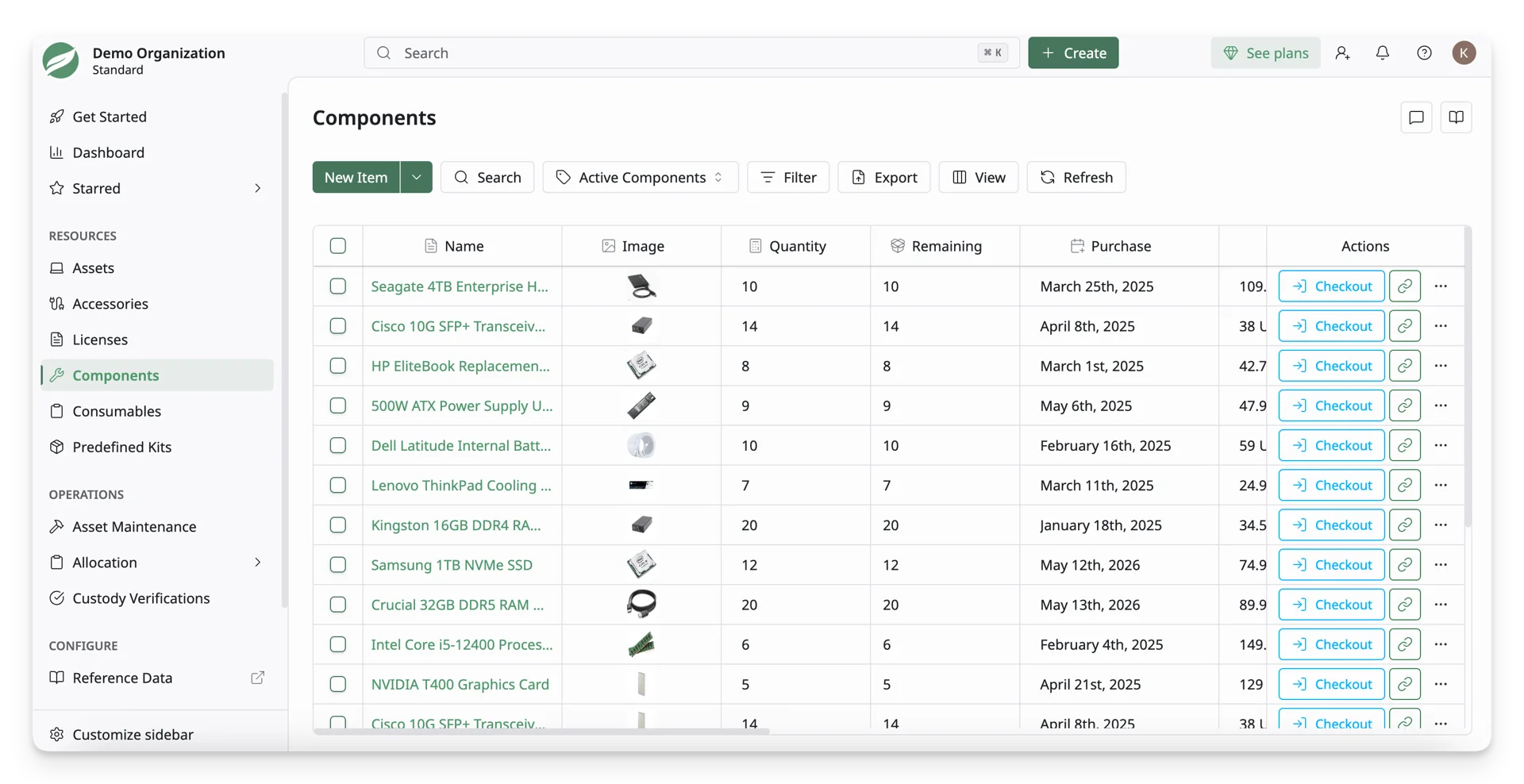
What are components? In AssetLoom, components are individual parts that make up or support the functionality of a larger physical asset. They are typically installed in, attached to, or reserved for assets. Common examples include Hard Disk Drives (HDDs), Solid State Drives (SSDs), RAM modules, processors, batteries, graphics cards, power supplies, and network modules.
Components are tracked by quantity, allowing you to manage them as a single record while monitoring stock levels and usage. You can:
- Assign components to assets (e.g., RAM or an SSD to a laptop).
- Maintain purchase, serial, location, and department details for better maintenance and inventory control.
- Set minimum stock thresholds to ensure critical components are always available.
In This Guide
In this guide, you will learn how to navigate and manage components using the Components List page, including:
- The toolbar: Create new components and use tools such as search, filtering, exporting, and view customization.
- The component table: Understand how components are displayed and how to customize columns, rearrange them, and edit component information directly in the table.
- Actions on components: Perform actions on individual components or apply bulk operations to multiple components at once.
1. The Toolbar
The toolbar at the top of the page provides quick access to common actions.
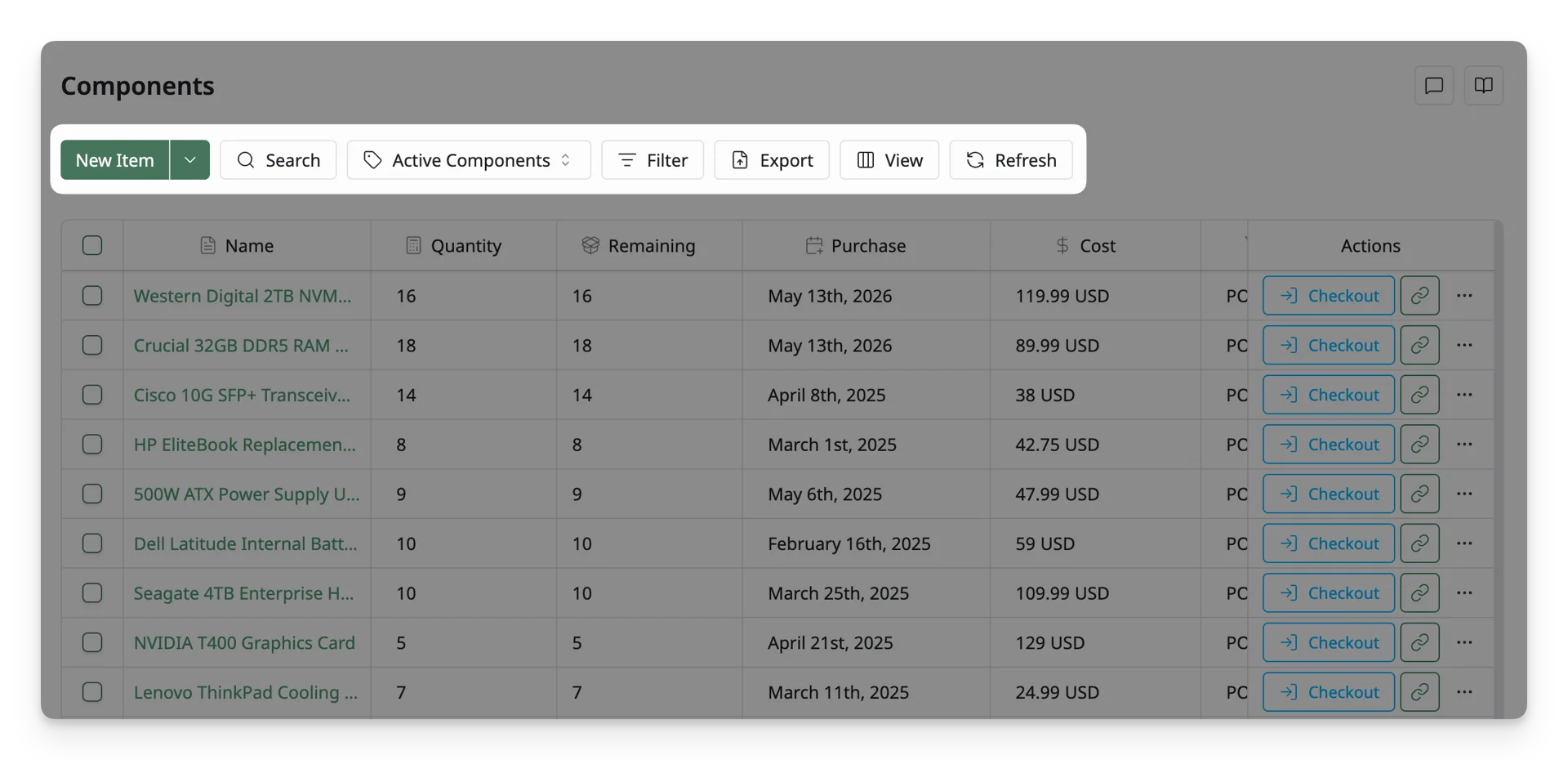
Here’s what you can do with the toolbar:
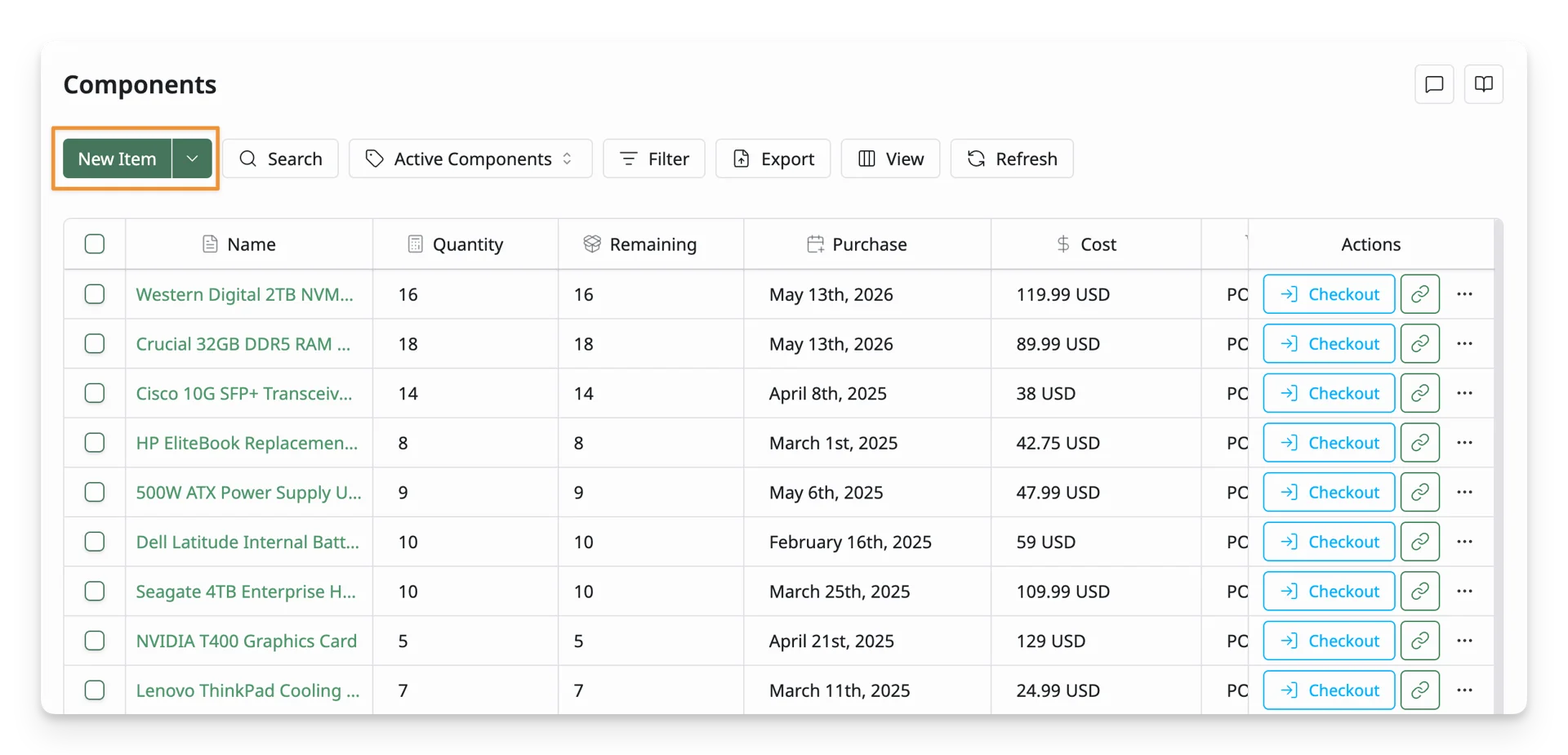
1.1. Add new components:
Use the “New Item” function to create new components manually.
1.2. Search:
Use the “Search” function to quickly find specific components in the list. You can find these components with:
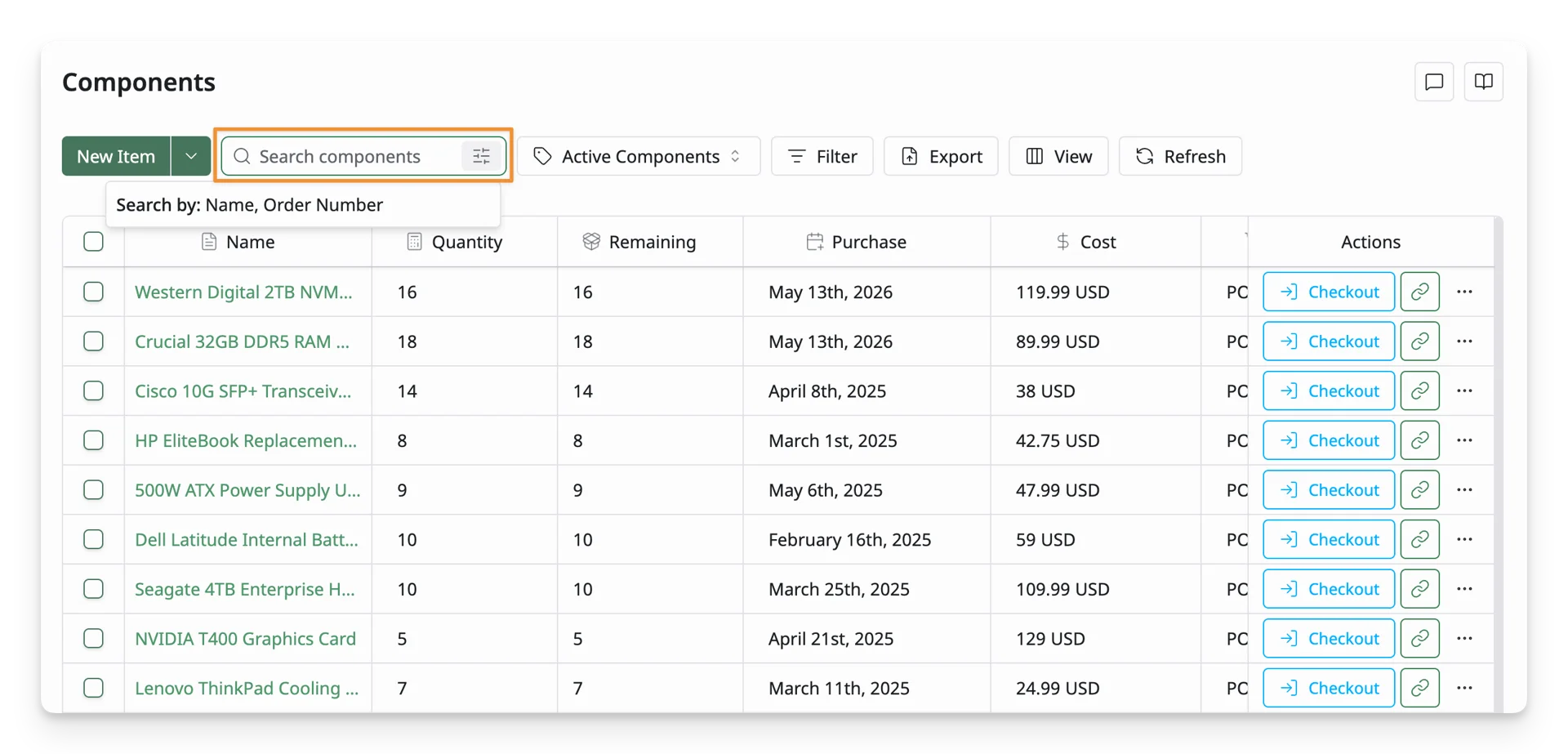
- Name: Search by the component name (e.g., “RAM”, “SSD”).
- Order Number: Search components based on specific purchase orders.
1.3. View Active/Trash Components
You can easily manage your components using the “Active Components/Trash” function to switch between two categories:
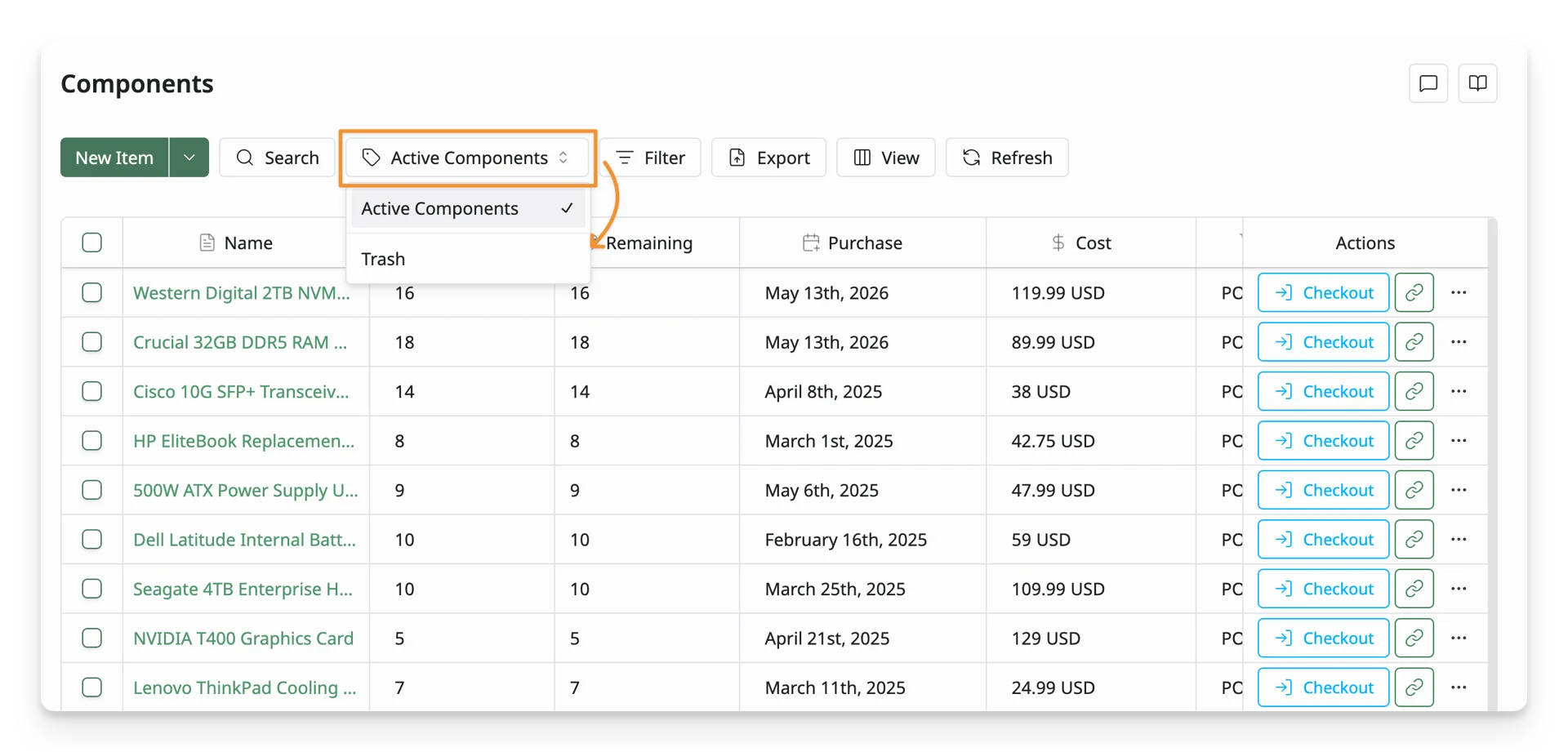
- Active Components: This section includes all components that are currently in use, whether they are in stock or out of stock. You can view and manage these items as part of your active inventory.
- Trash: This section contains components that have been temporarily deleted from the list. These items are not permanently removed and can be restored if needed.
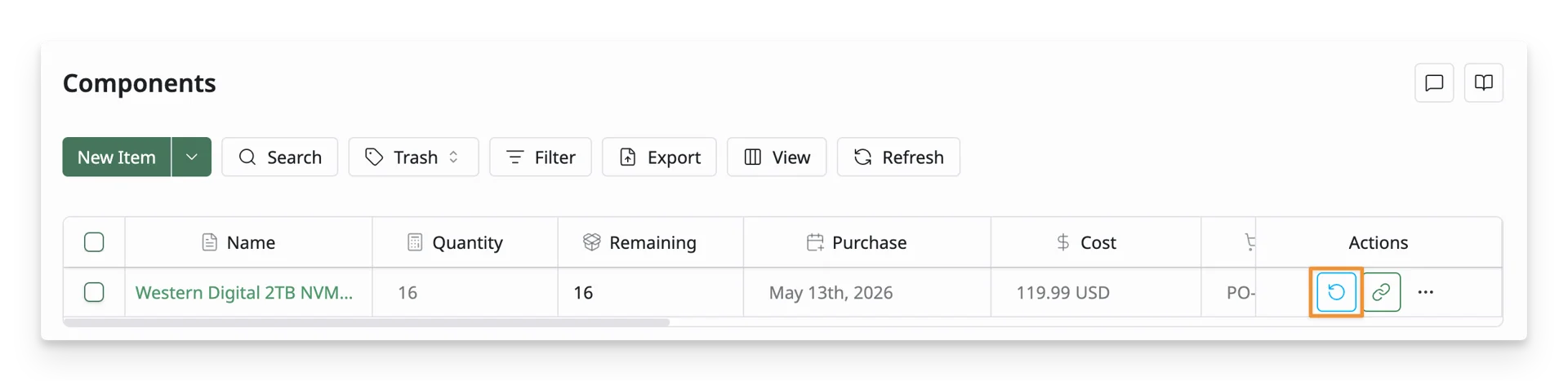
1.4. Filter
Use the Filter function to narrow down the component list based on specific criteria. This is especially useful when managing a large number of components.
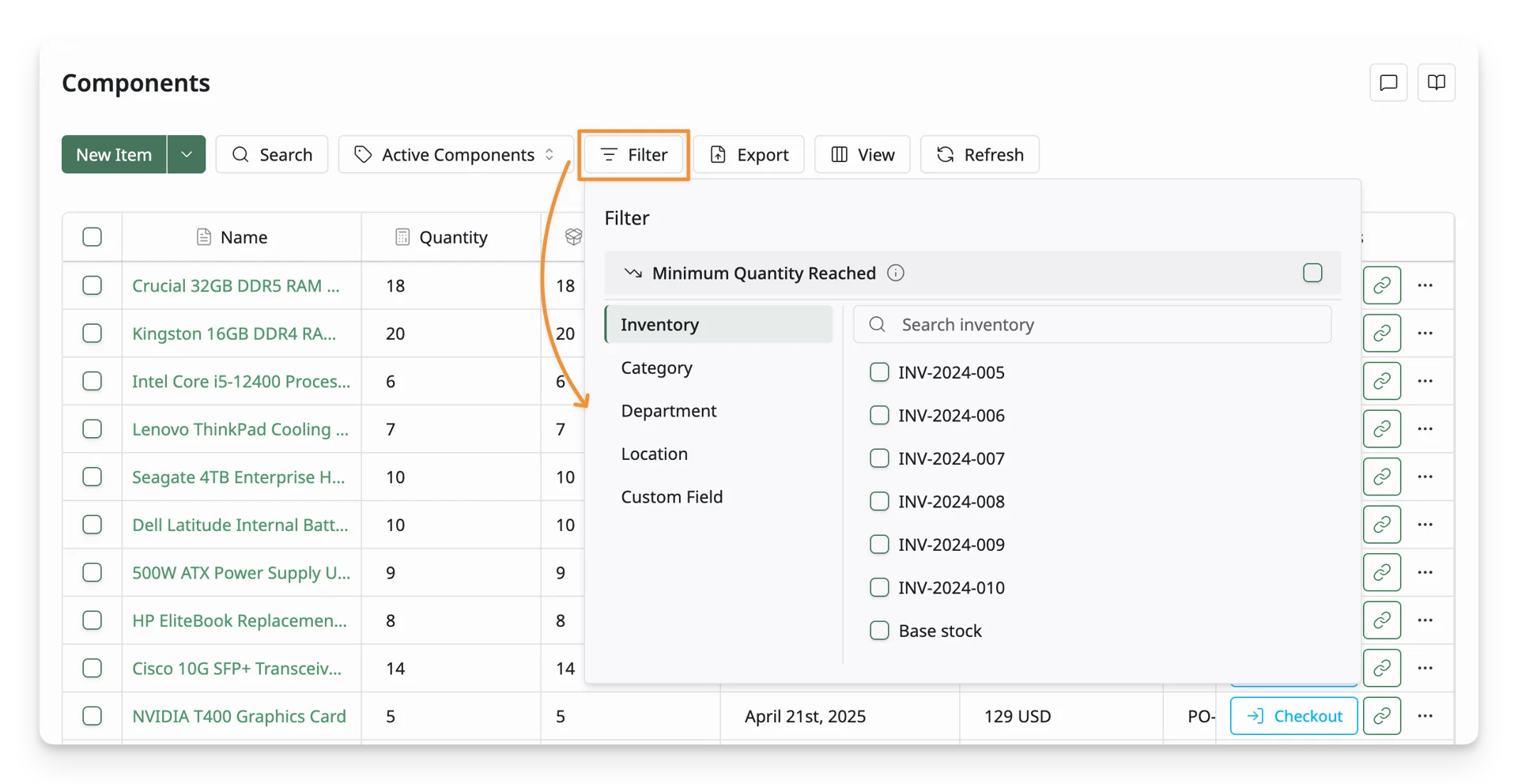
- Minimum Quantity Reached - Filter components that have reached the minimum quantity threshold
- Inventory – Show components belonging to specific inventories
- Category – Filter by component type, such as Processor, Battery, etc
- Department – Show components assigned to a particular department
- Location – Filter components by their current location
You can apply multiple filters at the same time to further refine the component list. Active filters are indicated on the Filter button, showing how many filters are currently applied. To remove all filters, click Clear all in the filter panel.
1.5. Export
Use the “Export” function to download the components data displayed in the component list as CSV or PDF.
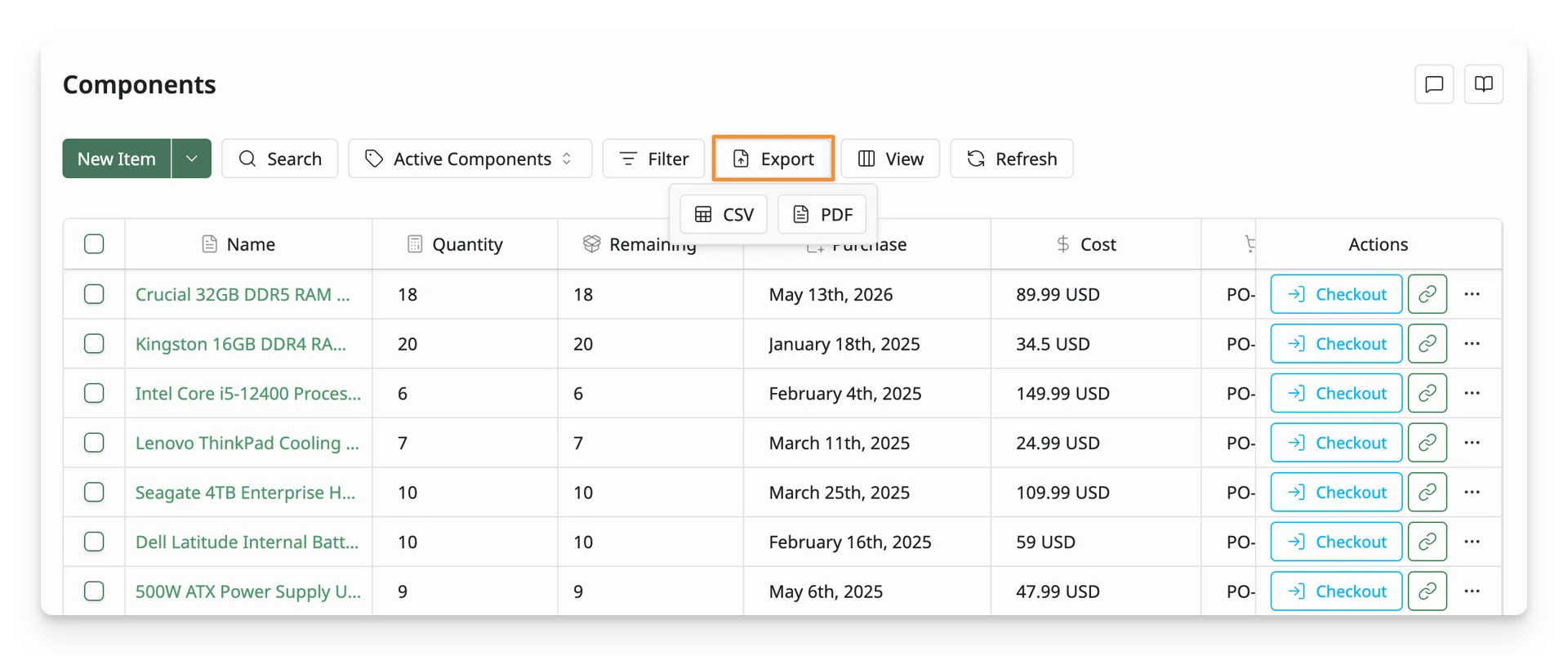
The export reflects your current view. Filters, searches, and visible columns are exported exactly as they appear on the screen.
1.6. View
Use the “View” function to customize how component information is displayed in the component list. With the View panel, you can:
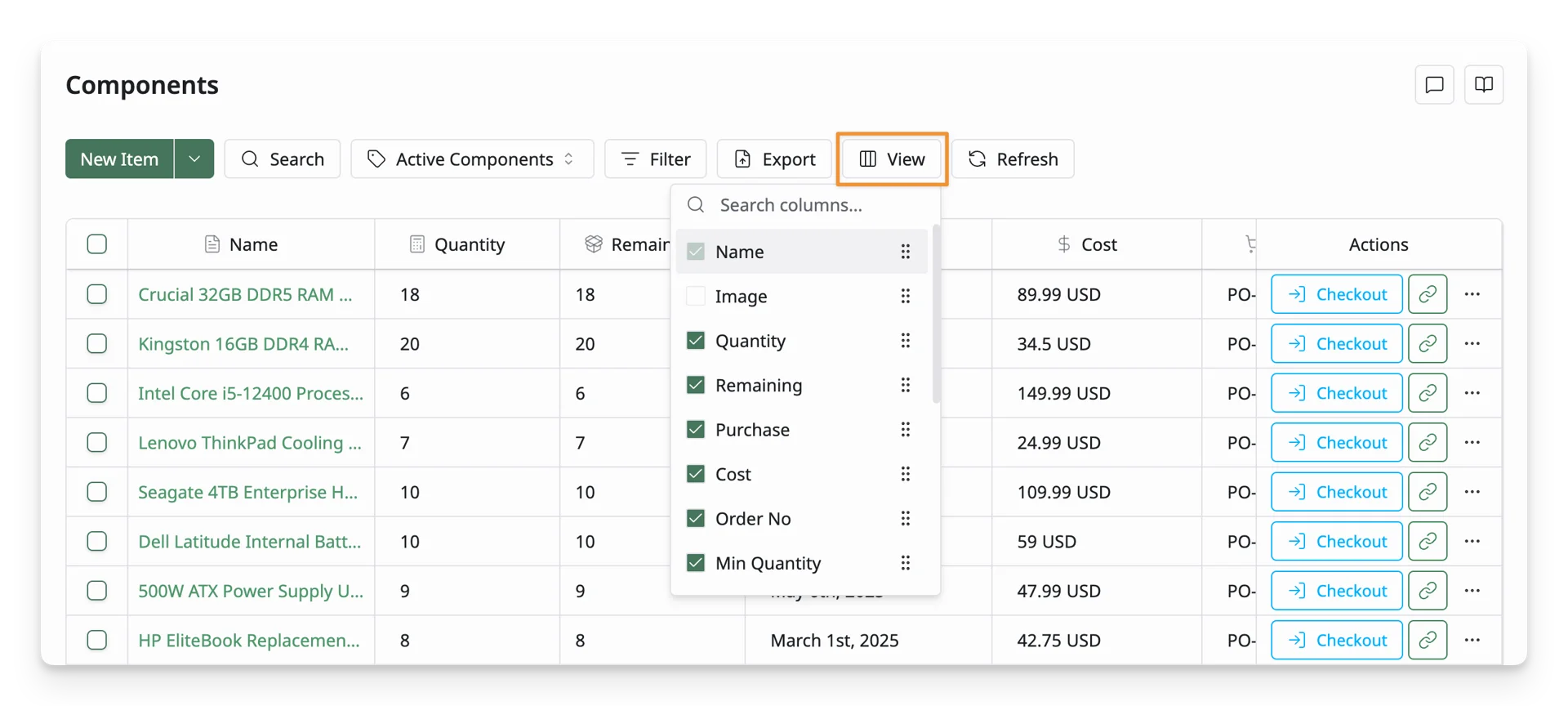
- Show or hide columns: Toggle columns on or off to control which component attributes are displayed in the component list.
- Rearrange columns: Drag and reorder columns to change their position in the table.
- Search for columns: Use the Search columns field to quickly find a specific column when working with many available attributes.
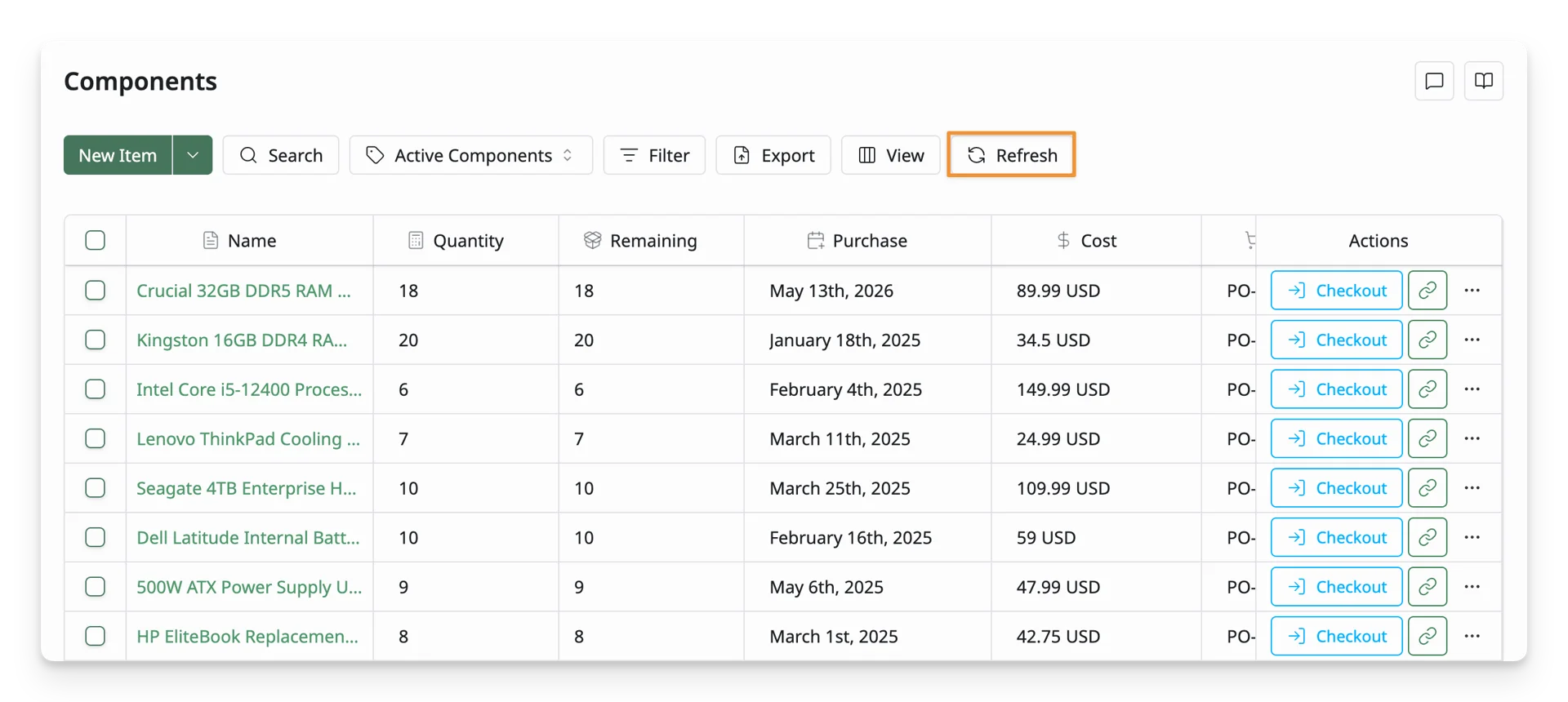
1.7. Refresh
Click the “Refresh” button to reload the component list.
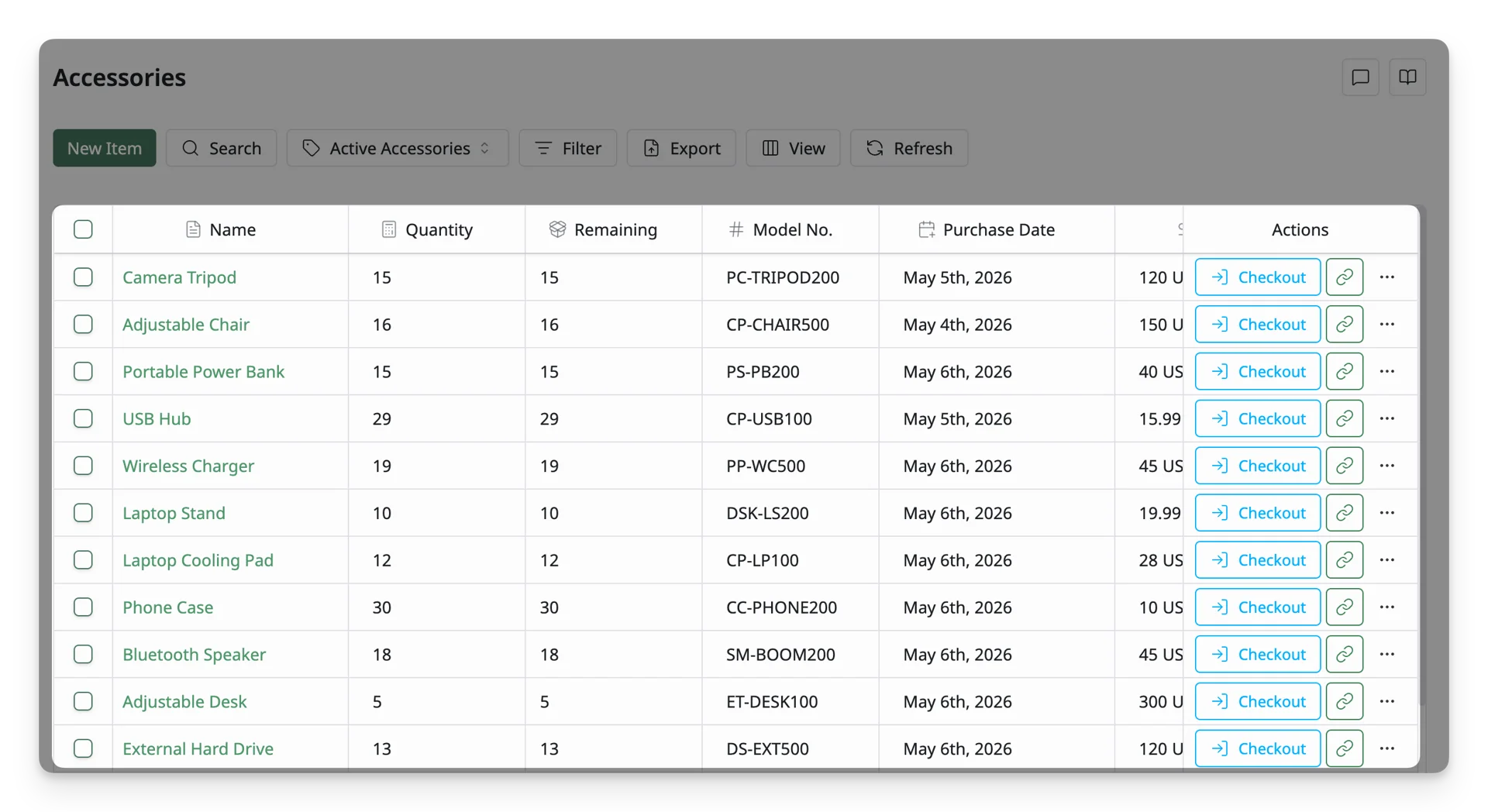
2. The Component Table
The Component Table lists all components managed in AssetLoom. Each row shows a component’s name, quantity, category, remaining number, and other key details.
Click on a component to view its detailed information.
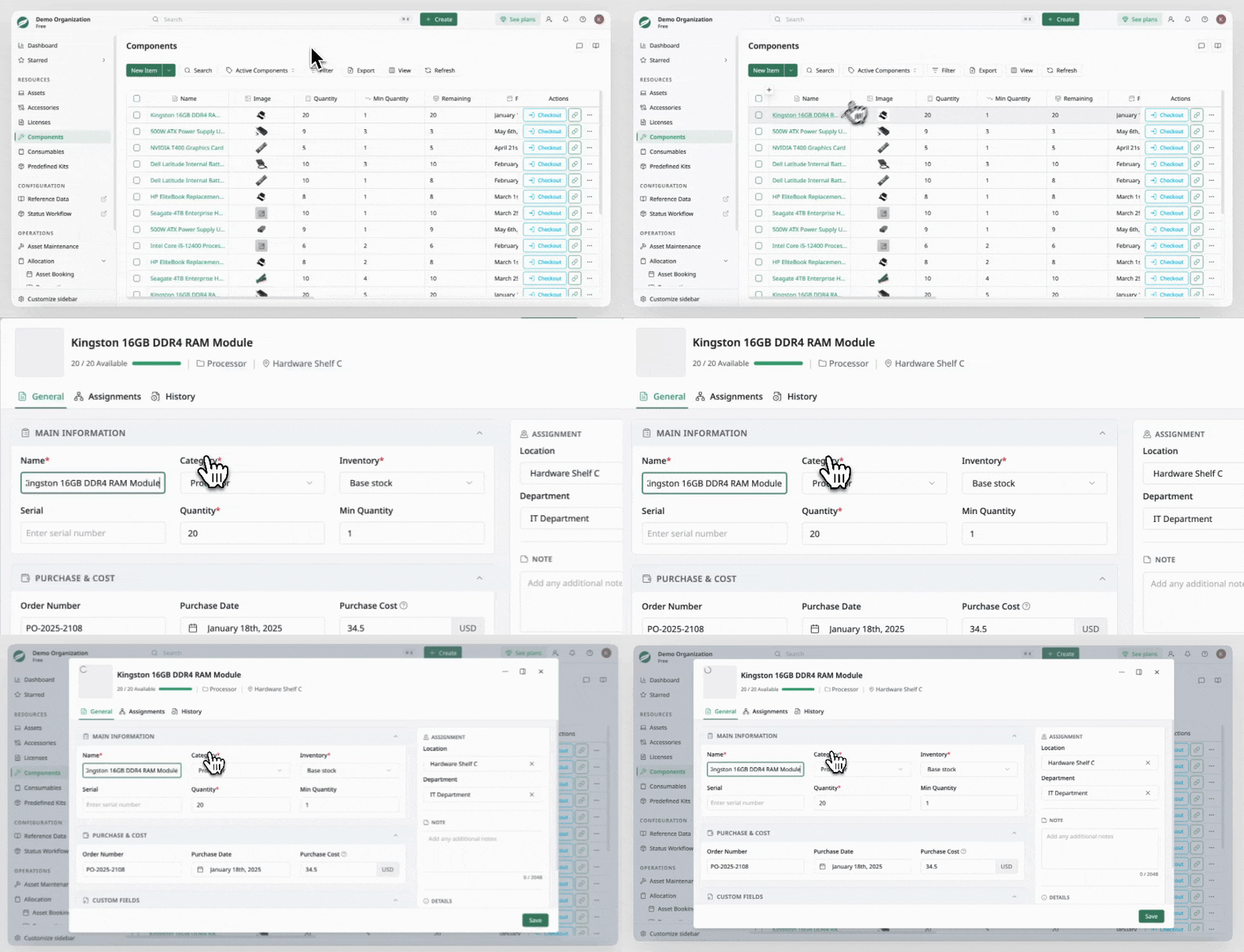
From the Component Table, you can:
Manage Columns in the Component Table
You can control which columns are visible and how they are arranged in the table.
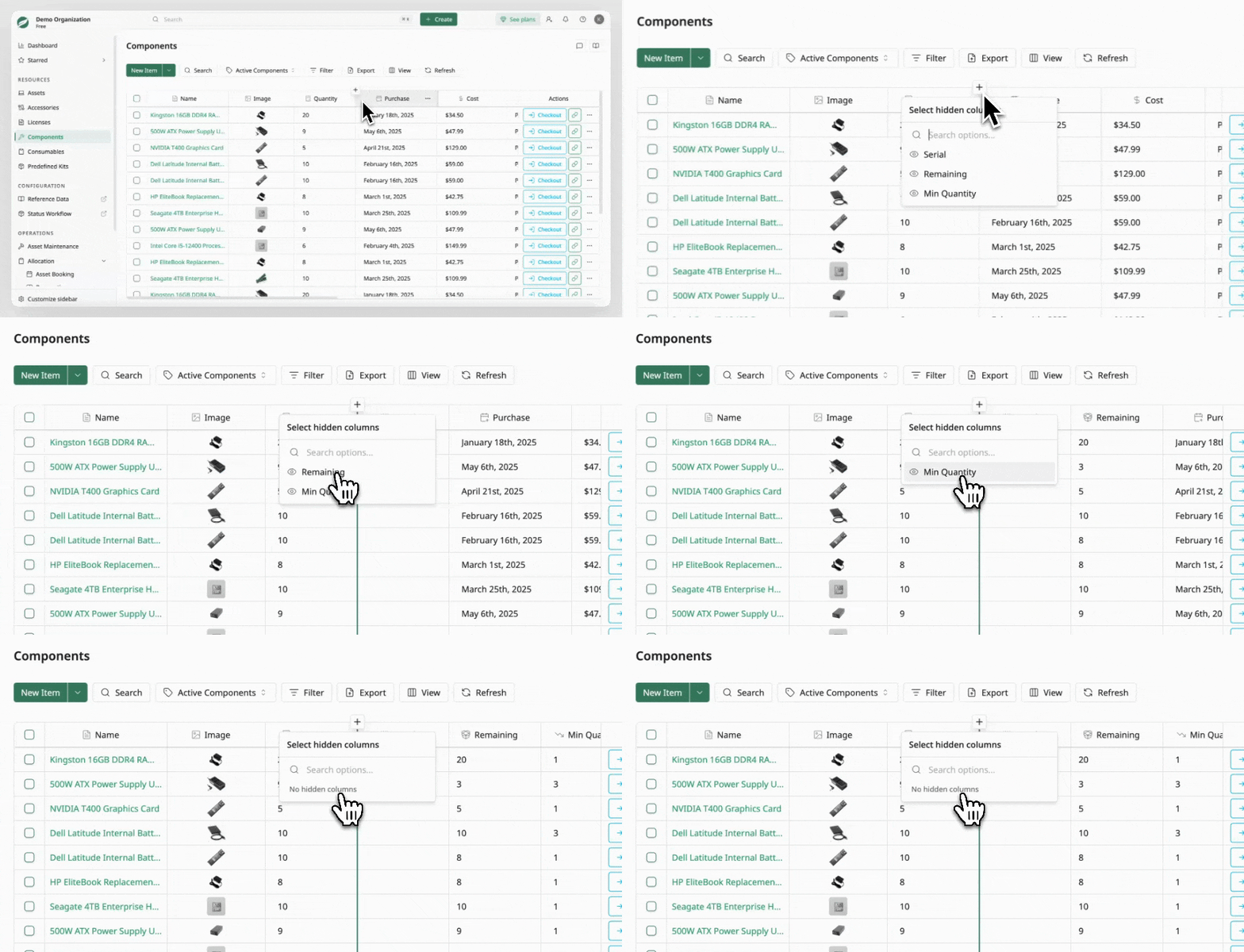
Add hidden columns
Hover over the table header to reveal the + button. Clicking this button opens a list of hidden columns that can be added back to the table. You can search for columns in this panel to quickly locate the one you want to display.
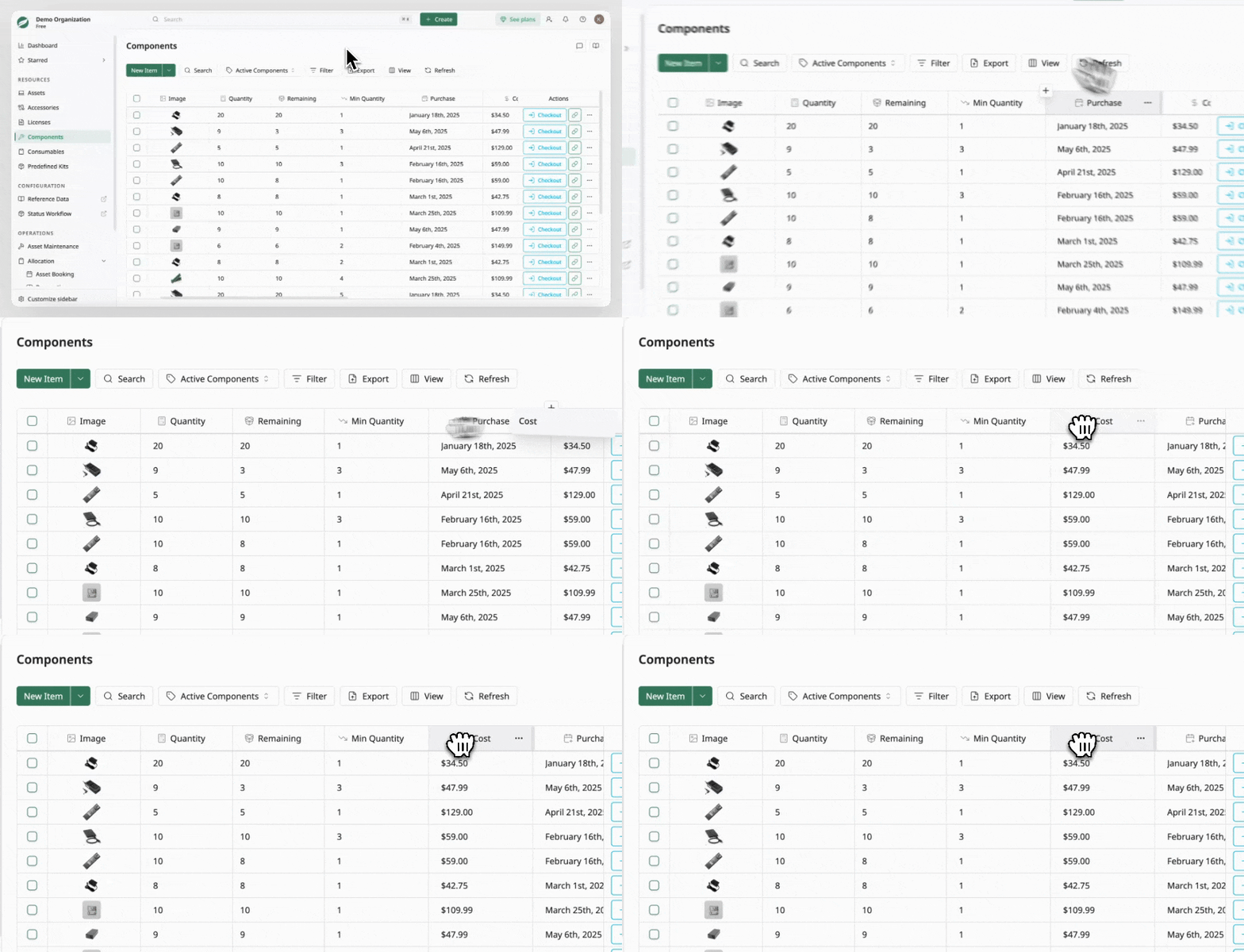
Rearrange columns
Columns can be reordered by dragging and dropping them within the table header. This allows you to organize the table layout based on your preferred workflow.
Column options
Each column header includes a more options menu (⋯) where you can perform additional actions:
- Sort A → Z: Sort the column values in ascending order
- Sort Z → A: Sort the column values in descending order
- Expand/collapse Column: Reduce/restore the column width on the table
- Hide Column: Temporarily hide the selected column from the table
- Pin Column / Unpin Column: Keep a column fixed in place when scrolling horizontally
- Add Column to Right: Insert a hidden column next to the selected column
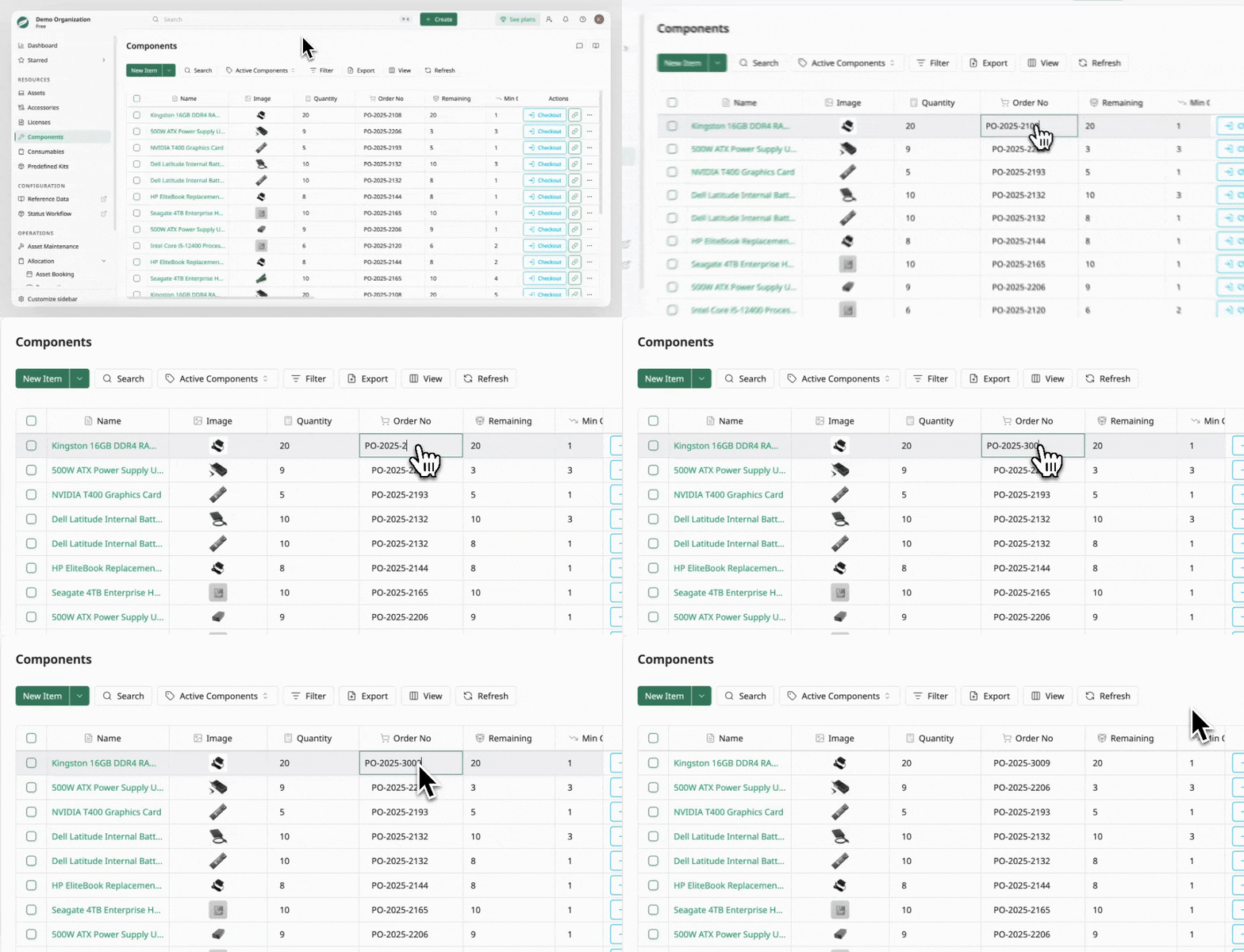
Edit Component Information Directly on the Component Table
Component information can be edited directly within the table. Click a data cell to update its value. This inline editing lets you quickly update component details without opening a separate page.
3. Component Actions
AssetLoom allows you to perform actions on either an individual component or multiple components at once.
Actions on an Individual Component
Each component row includes an actions menu that provides operations specific to that component.
Click the ⋯ button at the end of a row to open the actions menu.
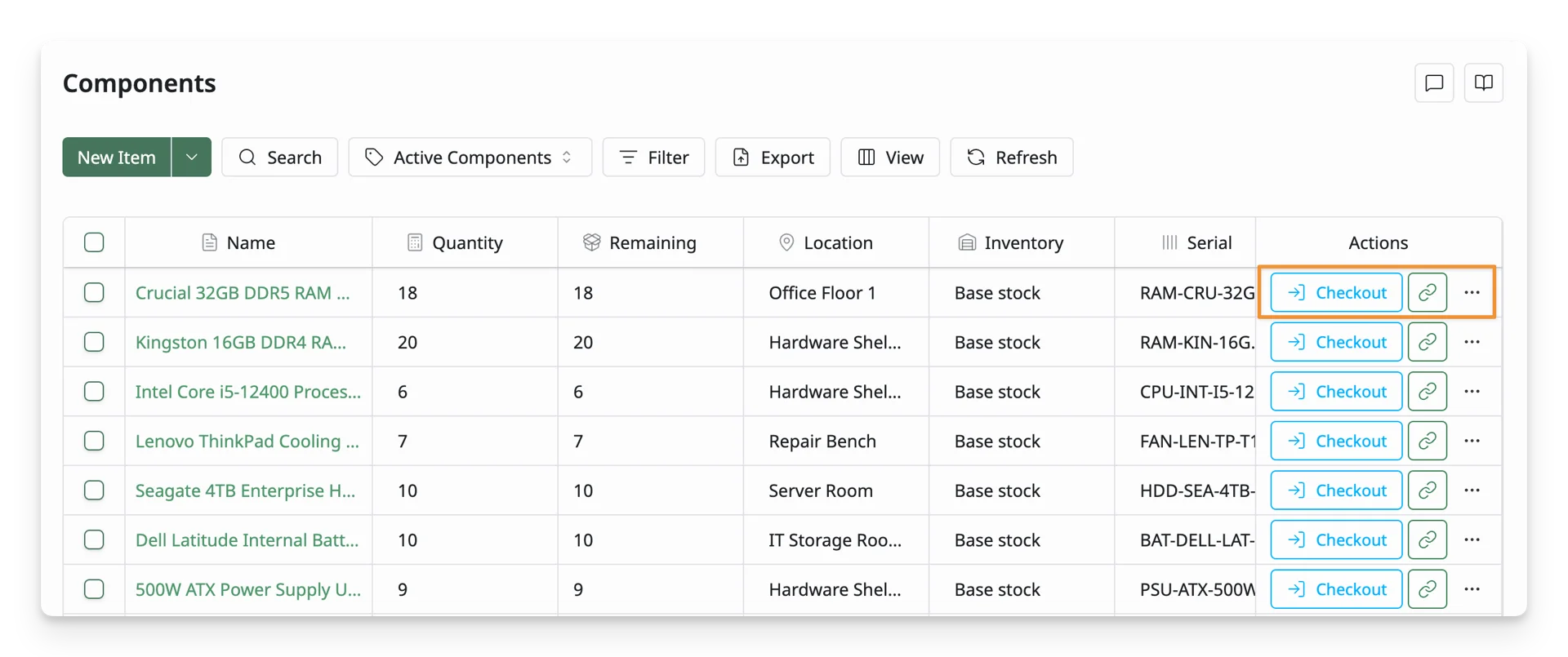
Available actions include:
- Checkout: Assign the component to an asset.
- Edit: Open the component details to update its information.
- Copy Link: Copy a direct link to the component for quick sharing.
- Delete: Remove the component from the system.
These actions allow you to quickly manage a component without leaving the component list.
Bulk Actions
Bulk actions allow you to perform operations on multiple components at the same time. To select components, use the checkboxes on the left side of the components table.
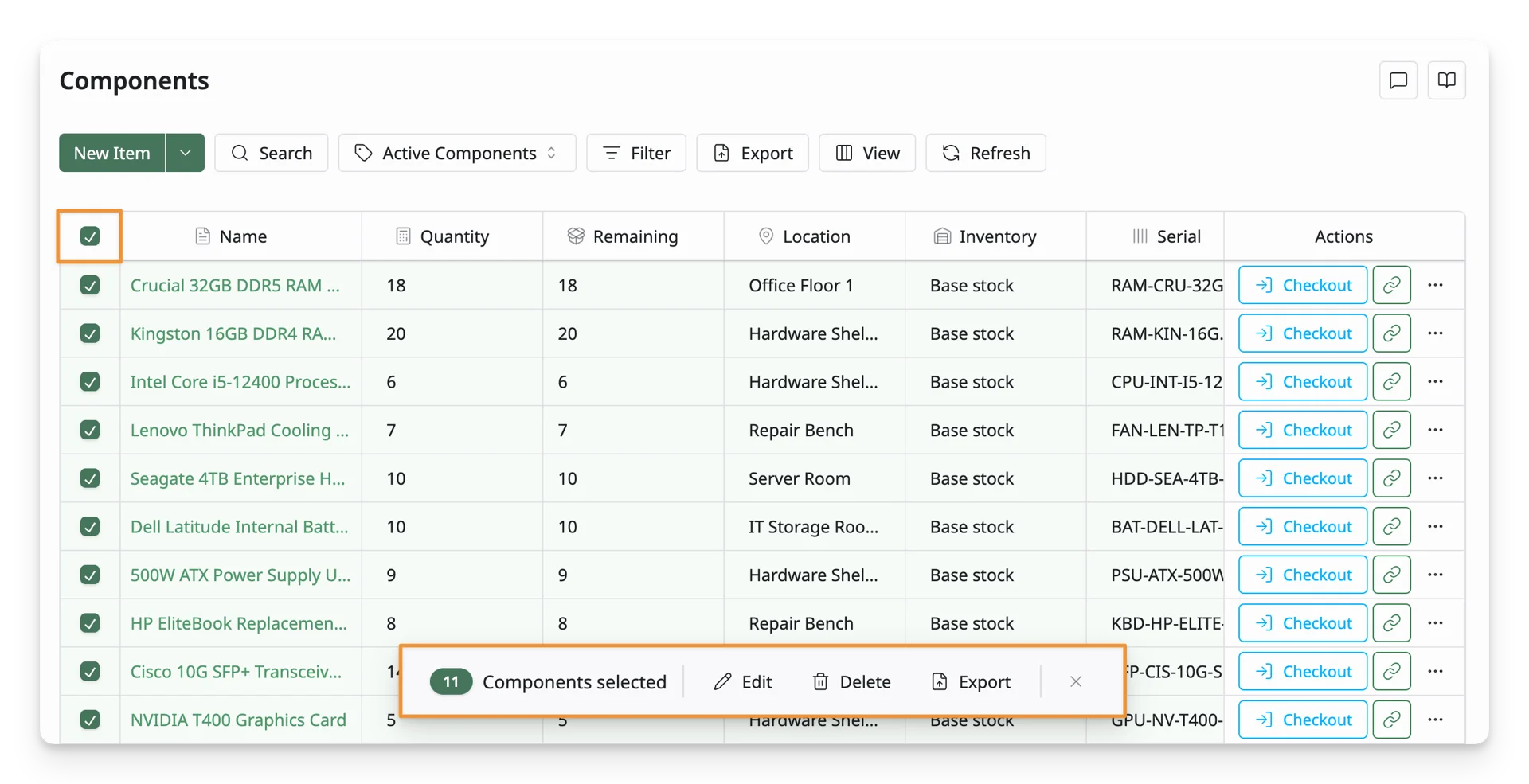
Once one or more components are selected, a bulk action bar will appear at the bottom of the page showing the number of selected items. From this bar, you can perform actions on all selected components at once, including:
- Edit: Modify properties for all selected components.
- Delete: Remove the selected components from the component list.
- Export: Export the selected components for reporting or external use.
What’s Next?
- Create a Component Using the Creation Form: Create a component manually in AssetLoom
- Import New Components: Bulk import components into AssetLoom