How to Align Software Asset Management Lifecycle Processes with ITIL
Learn how to align Software Asset Management Lifecycle Processes with ITIL to optimize IT operation, compliance, and efficiency.
In IT environments where complexity is the norm, two disciplines stand out for keeping things under control: Software Asset Management Lifecycle Processes and IT Service Management (ITSM), often underpinned by the ITIL framework.
Many teams approach these practices separately. Software Asset Management (SAM) is often seen as a way to track licenses and reduce costs. ITIL, on the other hand, governs service delivery and operational excellence. But here’s the catch: when you align your Software Asset Management Lifecycle Processes with ITIL, you unlock strategic benefits across compliance, service quality, and cost efficiency.
This article explores how to integrate these two frameworks so your software assets directly support IT services with greater agility, accuracy, and alignment.
Understanding Software Asset Management Lifecycle Processes and ITIL
Before diving into the integration, let’s clarify what Software Asset Management Lifecycle Processes and ITIL are.
Software Asset Management (SAM) Lifecycle Processes
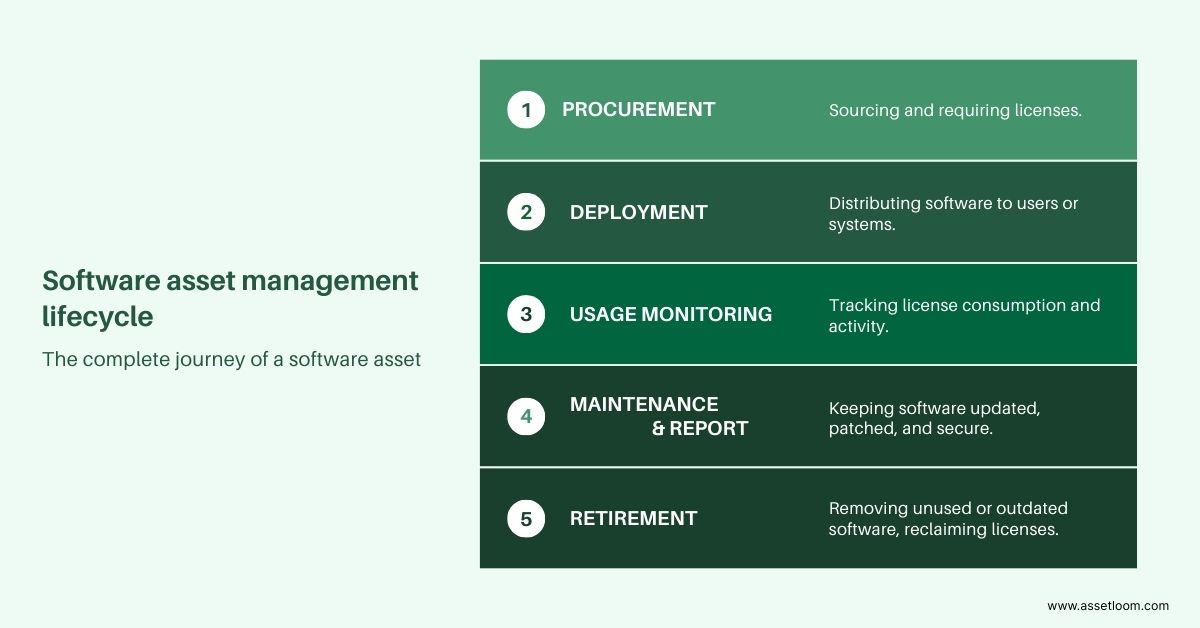
The software asset management lifecycle process covers the complete journey of a software asset, from initial request to retirement. It typically includes:
- Procurement – Sourcing and acquiring licenses
- Deployment – Distributing software to users or systems
- Usage Monitoring – Tracking license consumption and activity
- Maintenance & Support – Keeping software updated, patched, and secure
- Retirement – Removing unused or outdated software, reclaiming licenses
Each stage involves critical data and decisions that impact cost, compliance, and productivity.
Related article: Software Asset Management Lifecycle Explained
The ITIL Service Lifecycle
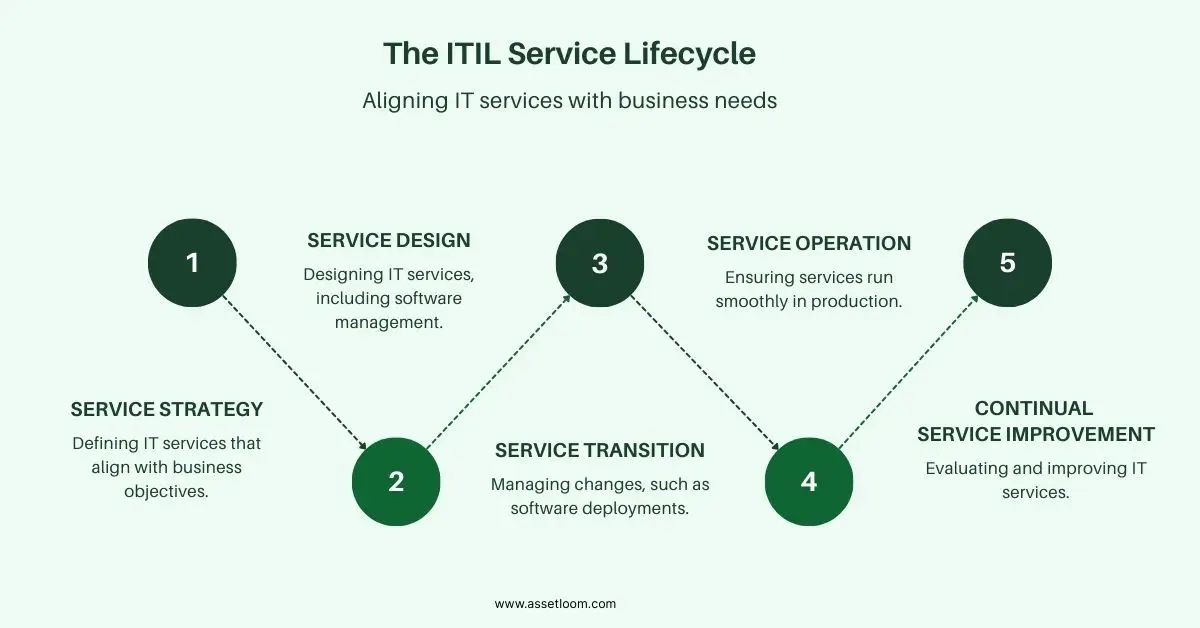
ITIL is a globally recognized framework for IT service management (ITSM) that provides best practices for delivering high-quality IT services. ITIL focuses on aligning IT services with business needs and includes processes like:
- Service Strategy: Defining IT services that align with business objectives.
- Service Design: Designing IT services, including software management.
- Service Transition: Managing changes, such as software deployments.
- Service Operation: Ensuring services run smoothly in production.
- Continual Service Improvement: Evaluating and improving IT services.
At its core, ITIL is about delivering value through reliable, repeatable services that align with business needs.
Now let’s explore how these lifecycles connect and how you can align them for maximum impact.
What Does This Integration Really Mean?
At its core, integrating SAM lifecycle processes with ITIL/ITSM frameworks means aligning the management of software assets with the processes and tools used to deliver IT services. SAM focuses on controlling costs, ensuring compliance, and optimizing software usage, while ITIL/ITSM provides a structured approach to managing IT services to meet business needs.
Integration bridges these two by:
- Sharing Data: Connecting SAM tools (e.g., AssetLoom, Snow Software, or Flexera) with ITSM platforms (e.g., ServiceNow, Jira Service Management) to create a unified view of assets and services.
- Aligning Processes: Mapping SAM stages to ITIL’s service lifecycle to ensure software management supports service delivery goals.
- Fostering Collaboration: Encouraging cross-functional teams (e.g., procurement, IT operations, and service desk) to work together using shared workflows.
- Leveraging Governance: Establishing policies and metrics to ensure accountability and continuous improvement.
Read more: ITAM vs. ITSM: Understanding the Core Differences
How AssetLoom Supports Software Asset Management Lifecycle Processes
Aligning Software Asset Management with ITIL requires accurate and accessible asset data. Without reliable information about software ownership, usage, licenses, and renewals, IT teams cannot make confident decisions about procurement, deployment, or optimization.
AssetLoom helps organizations centralize software asset information and connect it with broader IT asset management processes.
Centralize Software License Information
Managing software licenses across spreadsheets, emails, and vendor portals makes it difficult to maintain accurate records. AssetLoom helps teams organize software asset information in one centralized location.
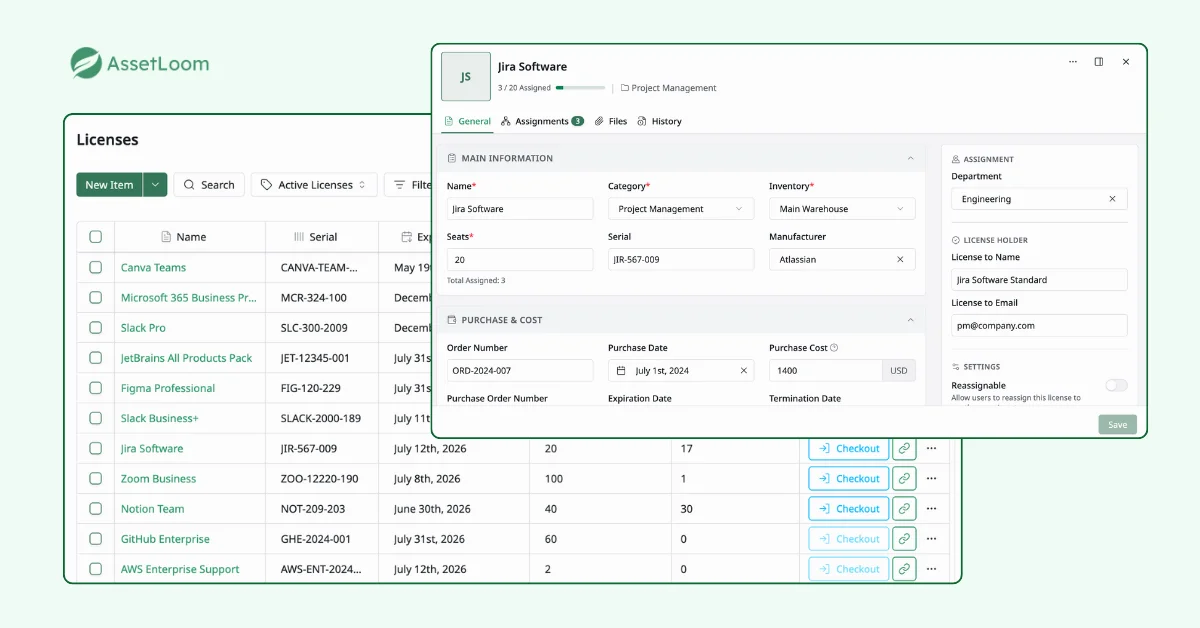
Teams can track key license details such as:
- Software name and vendor
- License type and quantity
- Purchase and renewal dates
- Contract and subscription information
- License status
With structured license records, IT and procurement teams can quickly understand what software is owned, what requires attention, and where license information is stored.
Connect Software Assets with IT Operations
Software decisions are often connected to the devices and users that rely on them. AssetLoom helps teams link software information with related IT asset records to create better operational visibility.
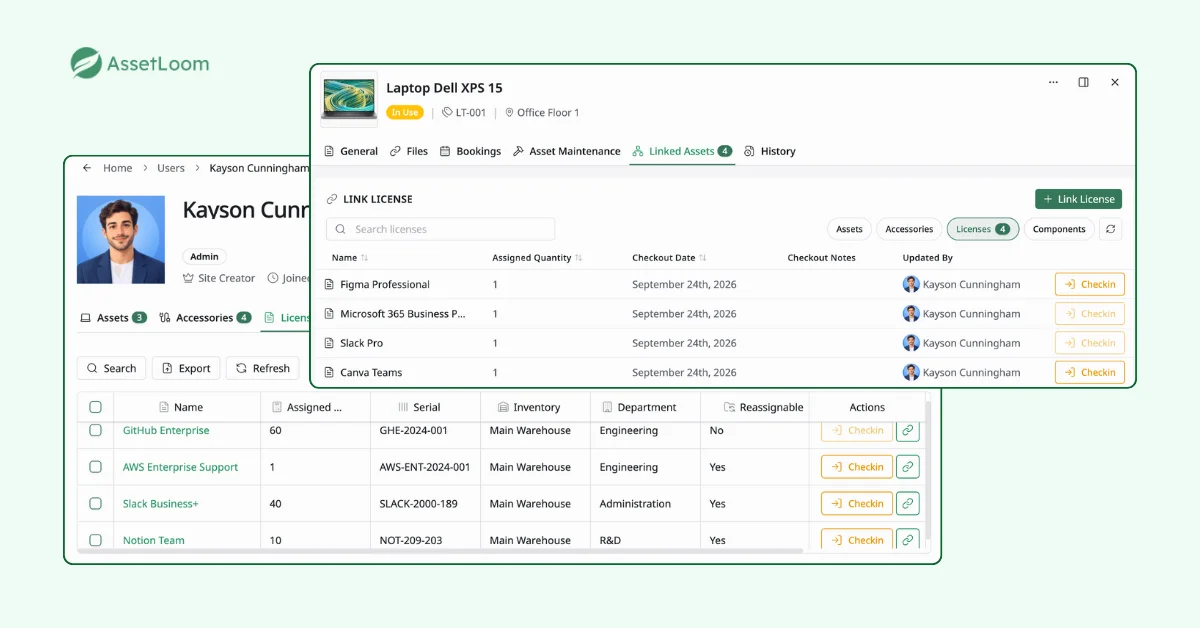
Teams can understand:
- Which users are assigned specific software licenses
- Which devices are associated with software usage
- How software supports different teams or business functions
- Which assets may require software updates or changes
This connection helps IT teams manage software as part of the wider IT environment instead of as separate license records.
Support Better Lifecycle Decisions
Software needs change over time. New tools are introduced, licenses are renewed, and outdated applications need to be removed.
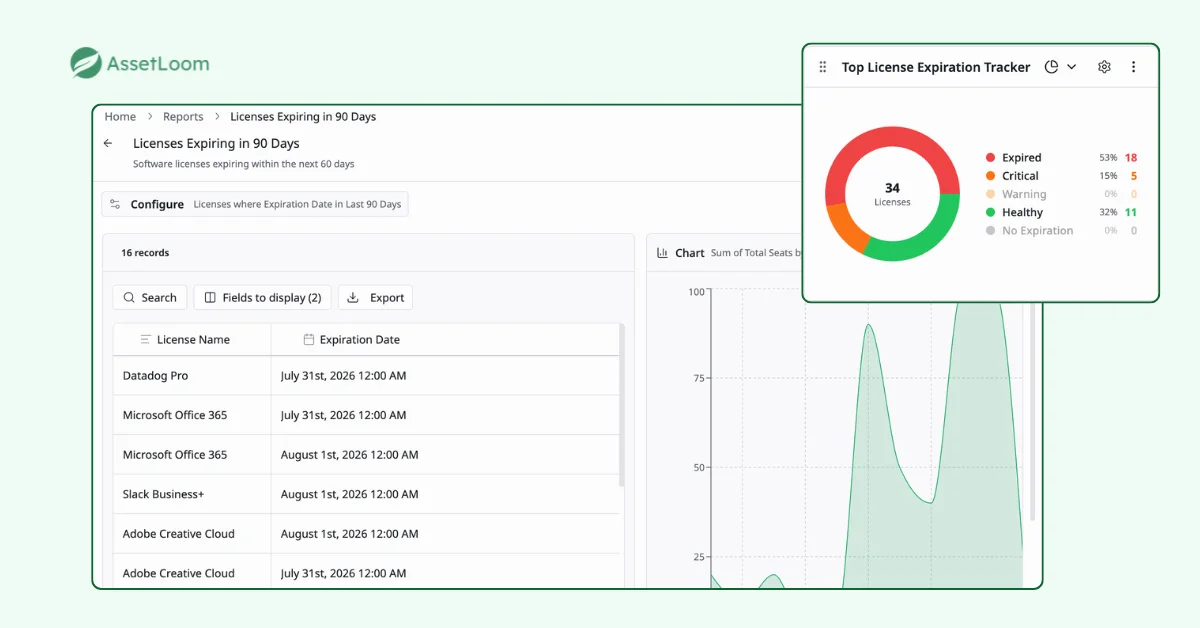
AssetLoom helps teams maintain software lifecycle visibility from procurement through retirement. By having accurate records of software ownership, usage, and status, organizations can make better decisions about renewals, compliance, and cost optimization.
The Connection Between SAM Lifecycle Processes and ITIL
The alignment of Software Asset Management Lifecycle Processes with ITIL is natural because both frameworks aim to optimize resources, improve efficiency, and support business objectives. SAM can be embedded within ITIL’s processes to create a structured, repeatable approach to software management. Here’s how each SAM lifecycle stage aligns with ITIL:
1. Procurement ↔ Service Strategy
What’s happening in SAM?
At the procurement stage, you’re evaluating needs, selecting vendors, and purchasing software licenses.
Where ITIL fits in:
In the Service Strategy phase, IT leaders define which services the organization needs and how to deliver value through IT. This includes analyzing demand, evaluating risks, and planning budgets.
↔ The SAM planning phase aligns with ITIL’s Service Strategy, which focuses on understanding business needs and defining services to meet them. During SAM planning, organizations assess their software requirements, budget constraints, and compliance obligations. ITIL’s Service Strategy ensures these requirements align with the organization’s broader goals. For example, ITIL’s Demand Management process helps forecast software needs, while Financial Management ensures cost-effective procurement decisions.
2. Deployment ↔ Service Design & Transition
What’s happening in SAM?
Software is distributed to endpoints or users. This is where licensing models (per device, per user, SaaS, etc.) need to match actual deployment patterns.
Where ITIL fits in:
In Service Design, IT defines how services will be delivered (including capacity, availability, and continuity). Service Transition covers the implementation of these services into live environments, including change management and configuration management.
↔ The acquisition phase of SAM involves procuring software licenses and negotiating contracts. This aligns with ITIL’s Service Design, particularly the Supplier Management and Service Catalogue Management processes. ITIL ensures that software procurement aligns with service requirements and that vendor agreements include clear terms for licensing, support, and maintenance. For example, when acquiring a cloud-based collaboration tool, ITIL’s Supplier Management ensures the vendor’s licensing terms are transparent and compliant, while Service Catalogue Management integrates the tool into the organization’s service portfolio.
3. Usage Monitoring ↔ Service Operation
What’s happening in SAM?
You track how software is being used: who’s using it, how often, and whether usage aligns with licensing terms.
Where ITIL fits in:
During Service Operation, IT teams monitor live services, handle incidents, and ensure SLAs are met. Software performance and availability are often tied directly to these goals.
↔ Deploying software requires careful coordination to avoid disruptions. ITIL’s Service Transition phase, including Change Management and Release and Deployment Management, ensures that software deployments are planned, tested, and rolled out smoothly. SAM’s deployment phase benefits from ITIL’s structured approach to managing changes and validating software installations.
4. Maintenance & Support ↔ Service Operation
What’s happening in SAM?
This phase involves patching, version control, and keeping software healthy and secure.
Where ITIL fits in:
Service Operation also includes routine maintenance, change management, and problem resolution. Ensuring software is supported and functioning properly is crucial to uptime and reliability.
↔ Once software is deployed, SAM’s management phase focuses on monitoring usage, ensuring compliance, and optimizing licenses. This aligns with ITIL’s Service Operation, particularly processes like Asset and Configuration Management (part of the Service Asset and Configuration Management, or SACM, process) and Request Fulfillment. ITIL’s SACM tracks software assets as configuration items, ensuring accurate records of licenses and usage, while Request Fulfillment handles user requests for software access.
5. Retirement ↔ Continual Service Improvement
What’s happening in SAM?
When software is no longer needed, it should be uninstalled, licenses reclaimed, and data cleared securely.
Where ITIL fits in:
Continual Service Improvement (CSI) focuses on identifying opportunities to enhance IT services, reduce waste, and optimize resources.
↔ The retirement phase of SAM involves decommissioning outdated software and reallocating licenses. ITIL’s Continual Service Improvement (CSI) complements this by evaluating the performance of software assets and identifying opportunities for optimization. For example, a business uses ITIL’s CSI to analyze the performance of legacy software, determining that it no longer meets business needs. SAM then manages the retirement process, ensuring licenses are reclaimed and compliance is maintained.
Read more: Software Asset Management Automation: How to Reduce Manual Work and Improve License Control
FAQs
1. What challenges do companies face when implementing Software Asset Management?
Common challenges include incomplete software records, unclear ownership, inconsistent processes, and limited visibility into actual usage. Many organizations also struggle to connect software purchasing decisions with operational needs.
A successful SAM approach requires accurate data, defined responsibilities, and processes that align with existing IT operations.
2. How does Software Asset Management improve IT service delivery?
Software Asset Management improves IT service delivery by helping teams understand what software is available, who uses it, and whether it meets business requirements.
With better software visibility, IT teams can respond faster to requests, avoid unnecessary purchases, reduce licensing risks, and make more informed decisions when supporting IT services.
3. What data is needed for effective Software Asset Management?
Effective SAM requires information across the software lifecycle, including software ownership, license details, vendors, contracts, renewal dates, deployment records, and usage information.
Connecting this data with users, devices, and business services helps organizations understand the real impact of their software investments.
4. How can companies improve software license compliance?
Companies can improve compliance by maintaining accurate license records, monitoring software usage, reviewing agreements regularly, and establishing clear processes for software requests and approvals.
Regular reviews help identify unused licenses, prevent unauthorized installations, and ensure software usage matches licensing agreements.
5. Can Software Asset Management work without an ITIL framework?
Yes. Organizations can implement Software Asset Management without using ITIL. However, aligning SAM processes with ITIL practices can create stronger connections between software management and IT service delivery.
This alignment helps teams integrate software decisions into processes such as service requests, changes, configuration management, and continual improvement.
Final Thoughts
The future of IT isn’t about more tools or faster services at all. It’s about smarter, more integrated processes that deliver value across the board.
When your software asset management lifecycle processes are aligned with the ITIL framework, your organization gains more than compliance: gains clarity, consistency, and control.
Start with one integration point, perhaps linking software deployment with change management, and build from there. The result is a stronger, more connected IT operation where assets and services move in sync.
Ready to improve your software asset management process? Centralize software licenses, track asset lifecycle information, and gain better visibility across your IT environment with AssetLoom