ServiceNow IT Asset management vs. AssetLoom: Which Fits Your Business?
ServiceNow IT Asset Management is a robust solution for tracking and optimizing IT assets. Compare it with AssetLoom to find the best fit for your business.
ServiceNow IT Asset Management and AssetLoom represent two distinct generations of IT asset management solutions. ServiceNow provides a broad enterprise platform built around IT service management workflows, while AssetLoom focuses on simplifying daily asset operations with modern inventory, lifecycle management, and verification capabilities.
These platforms want to streamline the complete lifecycle of physical and digital assets - from procurement and deployment to maintenance and disposal. They differ by a lot in their approach. ServiceNow builds on ITIL best practices for enterprise-level management. AssetLoom provides a more accessible solution for organizations looking for practical IT asset management without unnecessary complexity.
Choosing between these platforms isn’t simple, especially with mission-critical assets worth billions of dollars at stake. Our comparison will help you assess which solution is arranged better with your organization’s needs, budget, and growth plans.
ServiceNow IT Asset Management vs AssetLoom: Core Capabilities
Strong core capabilities form the base of good IT asset management. ServiceNow IT Asset Management and AssetLoom each have their own way of meeting these basic needs, though they go about it differently.
Asset Tracking and Inventory Management
ServiceNow shines at enterprise-level asset tracking with a detailed platform that brings hardware, software, and cloud assets together in one system. The platform uses various tracking technologies including GPS, barcodes, and RFID to keep tabs on computing equipment and servers. This smart setup helps organizations maintain accurate inventories across multiple locations and cuts down on manual data entry mistakes.
AssetLoom takes a practical approach to IT inventory management. It helps teams maintain a centralized record of hardware assets, accessories, components, consumables, and software licenses. Each asset record contains operational information such as asset tags, serial numbers, assigned users, locations, purchase details, warranty information, and current status.
Beyond storing asset information, AssetLoom supports daily IT operations with features like QR/barcode scanning, asset booking, custody verification, and asset history tracking.
This makes it easier for IT teams to answer common operational questions:
-
Who currently owns this device?
-
Where is this asset located?
-
Is this equipment available for reassignment?
-
What maintenance has been performed?
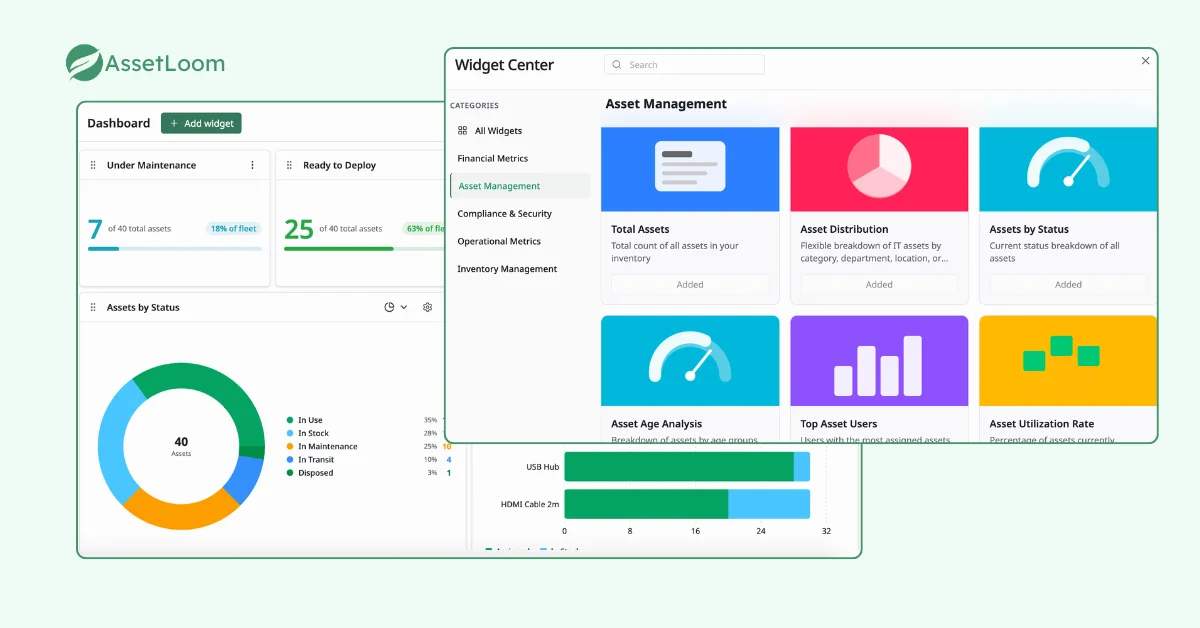
When an employee changes roles, ServiceNow can connect the device with related services and workflows. AssetLoom helps IT teams quickly verify the device, update ownership, and manage the handover process.
Lifecycle Management Approaches
ServiceNow uses a structured six-stage asset lifecycle (Request, Fulfill, Deploy, Monitor, Service, Retire) with automation at every step. Asset records update automatically through each phase, which means no manual updates. The platform’s forecasting tools look at inventory and usage patterns to help make smart buying decisions.
AssetLoom manages the complete asset lifecycle from acquisition to retirement. Teams can track asset assignment, ownership changes, maintenance activities, depreciation, and retirement history in one place.
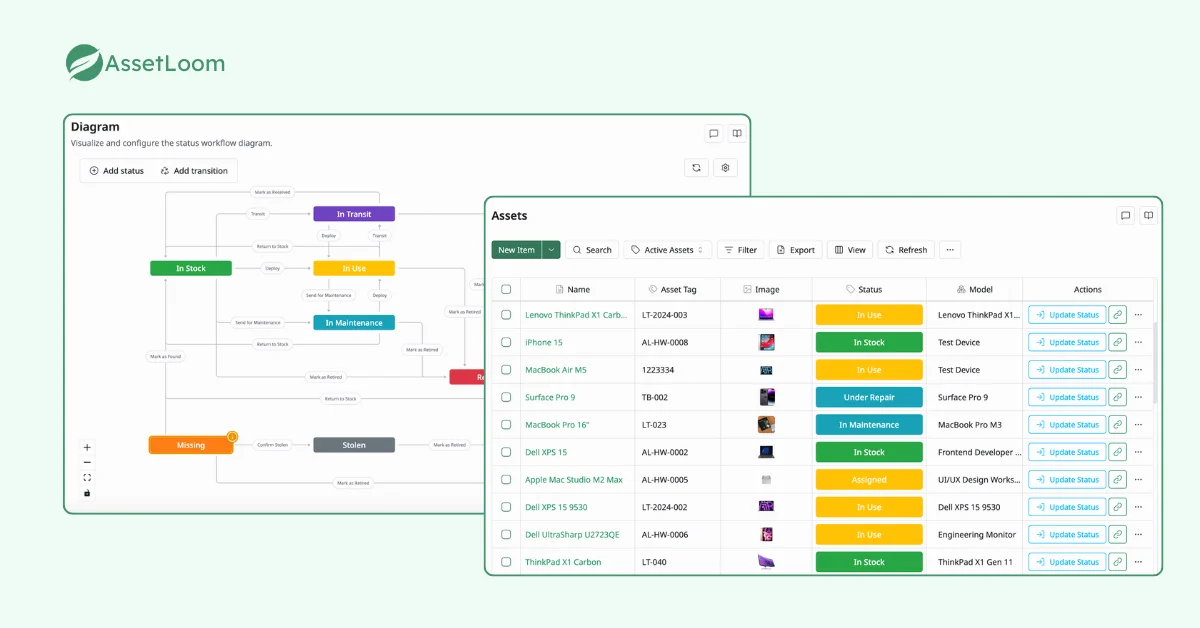
For example, when a laptop reaches the end of its useful life, IT teams can review its purchase information, depreciation value, repair history, and current status before deciding whether to replace or retire it. AssetLoom helps organizations maintain lifecycle visibility without requiring complex workflow configuration.
The biggest difference is in setup complexity. ServiceNow gives you more features and settings to play with, while AssetLoom focuses on making things easy to use with straightforward automation.
Asset Operations and Physical Verification
IT asset management is not only about storing records. Teams also need to manage daily activities such as assigning devices, collecting equipment, verifying ownership, and performing inventory checks.
ServiceNow supports these processes through enterprise workflows connected with IT service management.
AssetLoom focuses on making these everyday operations faster. Teams can use QR codes and barcode scanning to verify assets, manage check-in/check-out activities, track custody changes, and maintain accurate inventory records.
For organizations that regularly perform equipment audits, employee onboarding, offboarding, or device handovers, these operational workflows help reduce manual work and improve accountability.
Compliance and Risk Management Features
ServiceNow provides advanced compliance and risk management capabilities designed for organizations with complex regulatory requirements. It can connect asset data with broader IT workflows, governance processes, and reporting frameworks.
AssetLoom approaches compliance through accurate asset records and lifecycle documentation. By maintaining information such as ownership, location, maintenance history, and asset status, teams can improve audit readiness and reduce gaps in inventory visibility.
While ServiceNow supports deeper enterprise governance, AssetLoom focuses on helping IT teams maintain reliable asset information and operational control.
Pricing Models and ROI
IT teams need to carefully look at pricing and potential returns before they invest in asset management solutions. A good look at how ServiceNow and AssetLoom handle their pricing helps companies make smart financial choices that work for their needs.
ServiceNow IT Asset Management Pricing Structure
ServiceNow doesn’t use a standard pricing model. They create custom quotes based on what each company needs. Their packages scale up as companies grow, and prices flex to match specific requirements. You won’t find fixed prices listed anywhere since costs change based on industry, location, and how complex the setup is.
The pricing works on yearly subscriptions. What you pay depends on how many people use it and what they do with it. There are three levels - Standard, Professional, and Enterprise - each with its own set of features. Some reports show ServiceNow licenses cost between $70 and $100 per user for one application.
Total Cost of Ownership Analysis
The real cost goes beyond the price tag. Total cost of ownership (TCO) includes everything you spend throughout an asset’s life. ServiceNow’s Asset TCO feature adds up all these costs - buying, running, maintaining, fixing, and disposing.
This complete view helps companies make smart choices about their investments by looking at all the costs.
Expected Return on Investment
Companies using ServiceNow can see big returns. Some have reported ROI as high as 325% when they switch from spreadsheets. Companies that already have systems in place can still see returns over 250% by adding new asset management features.
The math behind ROI is pretty simple - take what you earned, subtract what you spent, divide by what you spent, and turn it into a percentage. ServiceNow’s software asset management saves money on IT and improves support. The main costs are what you pay your ITAM team and the tools they use.
Both systems help companies save money and reduce risks, but they do it differently. Smaller companies might see faster returns with AssetLoom’s lower starting costs. Bigger enterprises can probably justify spending more on ServiceNow because they’ll save more money over time.
Implementation and Integration
IT asset management solutions on these two platforms just need careful planning because they differ in their approach. Let’s look at how they handle implementation and integrate with other systems.
Setup Complexity and Timeline
ServiceNow ITAM provides a complete enterprise-level setup that needs dedicated project teams and structured planning. The implementation moves through multiple stages that include configuration, customization, data migration, and system integration. This thorough process usually takes several months, though organizations can see value sooner through strategic planning.
AssetLoom takes a different path with its quick deployment and simple setup process. Teams can start tracking assets within days thanks to its cloud-based architecture. ServiceNow follows ITIL frameworks that need special expertise. AssetLoom’s straightforward setup makes it available to teams that don’t have dedicated IT asset specialists.
Available Integrations with Existing Systems
ServiceNow’s platform architecture enables extensive integration options. The platform connects with certified integrations to many third-party apps. These include Microsoft Azure Active Directory for SSO usage tracking, BigFix to boost asset monitoring, and Jamf Pro for automatic data imports. Users can also connect with procurement systems like Coupa to automate purchasing.
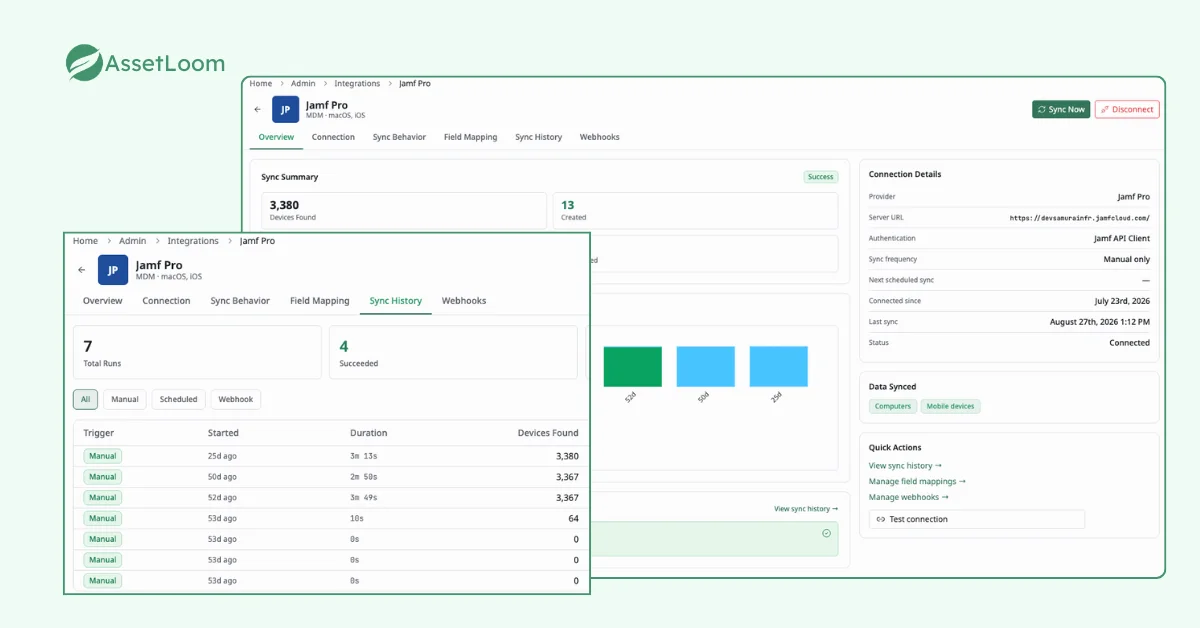
AssetLoom focuses on integrations that help IT teams keep inventory data accurate without adding unnecessary complexity. With Microsoft Intune and Jamf Pro integrations, AssetLoom can synchronize device information from endpoint management platforms, reducing manual updates and improving inventory accuracy. These integrations allow teams to continue using their existing device management tools while maintaining a centralized IT asset inventory.
API Capabilities and Customization Options
ServiceNow’s API capabilities work through multiple methods like REST and SOAP web services. JavaScript APIs help implement complex logic and ETL features move data across various protocols efficiently. The platform’s MID Server creates secure connections to systems behind network firewalls.
AssetLoom focuses on configuration settings rather than complex scripting that ServiceNow requires.
Organizations should weigh setup complexity against customization needs to choose between these platforms. ServiceNow gives more flexibility but needs complex implementation. AssetLoom deploys faster with standard options.
User Experience and Interface
A user-friendly interface makes any IT asset management solution work better. ServiceNow and AssetLoom each provide unique user experiences that show their different approaches to asset management.
Dashboard and Reporting Tools
ServiceNow ITAM’s Performance Analytics dashboards deliver powerful reporting features. These dashboards show how different indicators change over time, like pie charts but with time-based dimensions. Administrators can see quantitative measurements of usage, demand, and performance to guide their improvement plans. Users can customize their views based on renderer values and quickly tell the difference between Performance Analytics and standard report dashboards.
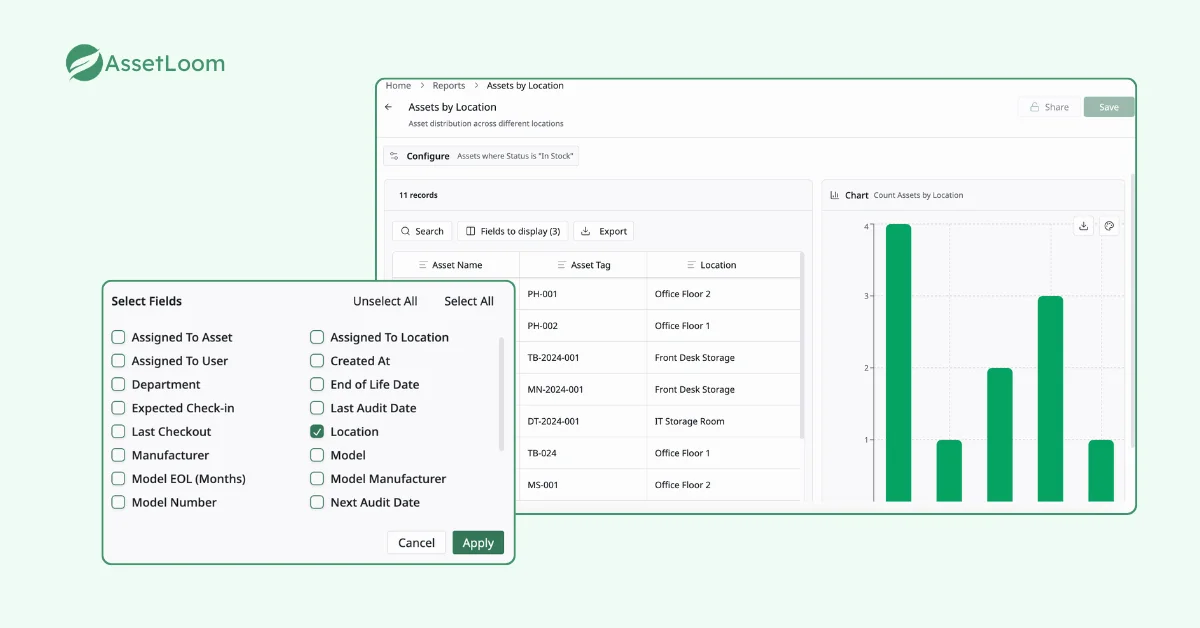
AssetLoom takes a different path with its “clean, colorful dashboard” that turns complex data into easy-to-understand visuals. The dashboard design “cuts through the clutter, presenting only the most relevant information in a clear, digestible format”. Procurement teams can compare vendor quotes side-by-side and make decisions faster without getting lost in too much data.
Mobile Accessibility
ServiceNow’s Mobile Platform comes with features that line up with Web Content Accessibility Guidelines. Users can adjust mobile analytics views based on their accessibility needs and set specific font sizes for mobile devices. Their Center of Excellence for Accessibility ensures mobile interfaces stay available to users with disabilities.
AssetLoom extends IT asset operations to mobile devices with its dedicated mobile app. Teams can view assigned assets, check asset details and history, scan QR codes, track maintenance activities, and receive notifications while working away from their desks. This is especially useful for inventory audits, equipment handovers, and maintenance tasks that require physical asset verification.
Learning Curve and Training Requirements
ServiceNow users must invest time in training. The platform offers many specialized courses like “Hardware Asset Management Fundamentals” and “Software Asset Management Professional Fundamentals”. Their detailed training path combines instructor-led and on-demand courses to build expertise gradually.
AssetLoom makes things simpler with an interface so accessible that “a quick demo is enough. No weeks-long training here”. Its design works well for users of all types, “from IT professionals managing complex inventories to small business owners”. This approach saves time and eliminates the hassle of searching through disorganized records.
Business Size Compatibility
The choice between IT asset management solutions usually depends on your organization’s size and complexity. Your current needs and future growth path largely determine the right fit.
ServiceNow for Enterprise Organizations
ServiceNow IT Asset Management targets large enterprises with complex IT environments. The platform excels at managing thousands of assets across multiple locations with detailed visibility. The Now Platform® delivers enterprise-level automation that streamlines processes, supports data-driven decisions, and controls expenditures from a unified system of action.
Large enterprises managing complex asset relationships benefit from ServiceNow’s overarching dashboard. The system builds on detailed asset relationships and multi-component data structures. Large businesses find its expandable solutions perfect for their growing needs without major reconfiguration.
ServiceNow proves most valuable when organizations need:
- Extensive customization options that match complex business processes
- Detailed compliance support for regulatory requirements
- Integration with broader IT service management frameworks
AssetLoom for Small to Medium Businesses
AssetLoom brands itself as “a comprehensive it asset management software designed to streamline the tracking and management of valuable assets” while emphasizing accessibility. The platform serves organizations looking for straightforward solutions with a simple approach that doesn’t require specialized expertise.
Unlike ServiceNow’s enterprise focus, AssetLoom describes itself as “best fit for businesses of all sizes needing a straightforward, cloud-based solution with a focus on ease of use or affordability”. Small to medium businesses without dedicated asset management teams find this accessibility attractive.
Scalability Considerations
ServiceNow’s tiered scaling approach offers structured growth paths designed for enterprises. Notwithstanding that, this tiered system “can provide easier cost management and a more straightforward selection process for smaller companies” but might feel “limiting” for “organizations experiencing rapid growth”.
AssetLoom approaches scalability differently by emphasizing flexibility as businesses expand. This matches the trend where “IT asset management software must be able to grow alongside an organization, adapting to increasing demands without requiring frequent system changes”.
Organizations should think over their current size and future growth patterns carefully. ServiceNow shines as complexity increases, supporting “the complex needs of even the largest enterprises”. AssetLoom maintains its simple value proposition throughout the scaling process.
Comparison Table
| Feature | ServiceNow IT Asset Management | AssetLoom |
|---|---|---|
| Launch Year | 2003 | 2025 |
| Pricing Model | Custom pricing; $70-$100 per user for an application | Asset-based pricing with plans from Free (250 assets) to Enterprise\n\n |
| Asset Tracking Approach | Enterprise-level tracking with GPS, barcodes, and RFID | Simple tracking with up-to-the-minute monitoring |
| Lifecycle Management | Six-stage well-laid-out lifecycle with detailed automation | Agile approach with simplified automation |
| Compliance Features | Resilient compliance monitoring, automated alerts, audit-ready reports | Built-in compliance checklists and automated documentation |
| Implementation Timeline | Several months | Days |
| Integration Capabilities | Extensive third-party integrations, detailed API support | Essential integrations, simplified API approach |
| Dashboard Complexity | Sophisticated Performance Analytics dashboards with temporal dimensions | Clean, simplified dashboards with focused relevant information |
| Training Requirements | Substantial training investment with multiple specialized courses | Minimal training needed; quick demo sufficient |
| Target Business Size | Large enterprises with complex IT environments | Small, medium and large Large enterprises businesses |
Conclusion
Businesses must consider several factors when picking between ServiceNow IT Asset Management and AssetLoom. These factors include their needs, resources, and plans for growth. ServiceNow shines as a detailed enterprise solution. Its complexity and high investment costs make it a better fit for large organizations with vast asset portfolios. AssetLoom presents a simplified alternative that draws attention through its ease of use and cost-effectiveness. Small to medium businesses find it an excellent choice.
Both platforms handle basic asset management tasks well, but they take different paths. ServiceNow gives you deep customization options and resilient compliance features that support complex enterprise needs. AssetLoom puts its focus on being easy to use and quick to set up. Your team can start managing assets in days instead of months.
ServiceNow ended up being perfect for enterprises that just need detailed asset management to blend with their IT service management systems. AssetLoom works best for organizations looking for the quickest way to track assets without too much overhead. Each solution excels in its market, which lets businesses pick the right tool based on their situation and goals.
FAQs
Q1. What are the key differences between ServiceNow IT Asset Management and AssetLoom?
ServiceNow offers a comprehensive enterprise solution with extensive customization and integration capabilities, while AssetLoom provides a streamlined, user-friendly approach with faster implementation and a simpler pricing model.
Q2. Which solution is better suited for small to medium-sized businesses?
AssetLoom is generally more suitable for small to medium-sized businesses due to its simplified approach, faster implementation, and lower cost. ServiceNow is typically more appropriate for large enterprises with complex IT environments.
Q3. How do the implementation timelines differ between ServiceNow and AssetLoom?
ServiceNow implementation can take several months due to its comprehensive nature, while AssetLoom can be deployed within days, allowing for quicker asset management initiation.
Q4. What are the main considerations for scalability when choosing between these solutions?
ServiceNow offers structured growth paths designed for enterprises, making it ideal for organizations anticipating significant expansion. AssetLoom focuses on flexibility without requiring major system overhauls, suitable for businesses seeking simplicity throughout their growth.
Q5. Can organizations migrate from spreadsheets or existing IT asset management tools to AssetLoom?
Yes. AssetLoom helps organizations move their asset records into a centralized IT asset management system through CSV import and structured asset data management.
Teams can import existing inventory information, organize assets by category, assign ownership, and continue improving their records through features like QR/barcode tracking, lifecycle management, and integrations with tools such as Microsoft Intune and Jamf Pro.
This makes AssetLoom suitable for organizations that want to move away from manual spreadsheets or simplify their existing asset management processes.