Why the Equipment Tracking Spreadsheet Fails
Learn why equipment tracking spreadsheets fall short for modern asset management and how modern ITAM solutions resolve all problems.
The equipment tracking spreadsheet has long been a go-to approach when it comes to tracking your equipment and overall equipment management. But as the landscape of asset management evolves, the limitations of spreadsheets become more apparent. While they might seem like a simple, low-cost solution, equipment tracking spreadsheets or tracking spreadsheet templates quickly prove to be inefficient and error-prone when handling larger, more dynamic equipment inventories.
In this article, we’ll explore the drawbacks of using spreadsheets for asset management and how modern IT asset management (ITAM) solutions address these shortcomings.
The Challenges of Using an Equipment Tracking Spreadsheet
At first glance, an equipment tracking spreadsheet might seem like an ideal tool for tracking IT assets. It’s inexpensive, easy to set up, and accessible to anyone familiar with spreadsheet software like Microsoft Excel or Google Sheets. For small businesses with a limited number of assets, a tracking spreadsheet template or a simple inventory template may be sufficient for tracking your equipment. However, as businesses scale and the number of assets increases, spreadsheets begin to show their flaws.
Scalability Issues
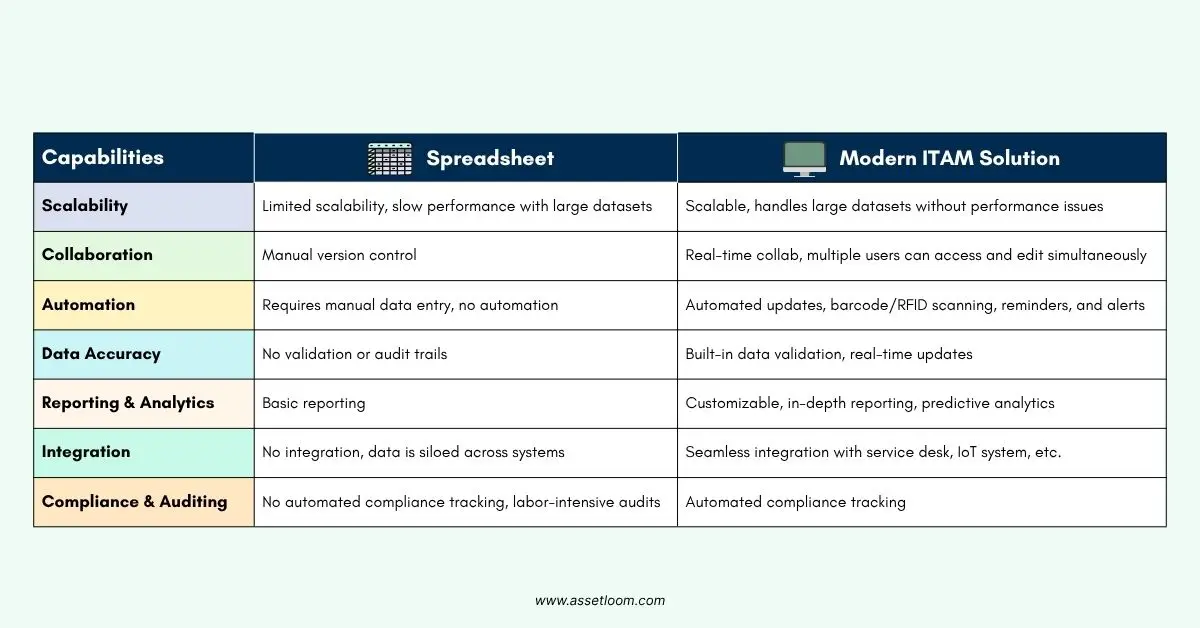
One of the most obvious issues is scalability. As an organization’s asset base grows, spreadsheets become increasingly difficult to manage. What starts as a simple equipment inventory or tracking spreadsheet template soon becomes a cumbersome document that’s slow to load and hard to navigate. It’s not uncommon for spreadsheets to become bloated with data, making it difficult to locate specific assets or even update key information, such as warranty dates, maintenance schedules, or asset locations. The sheer volume of assets also increases the chances of human error. Mistyped serial numbers, incorrectly entered data, or missed updates are common problems that can lead to discrepancies in asset tracking.
Collaboration Challenges
Another significant drawback of spreadsheets is their limited ability to foster collaboration. In larger organizations, asset management is often a team effort that involves multiple departments, such as IT, procurement, finance, and operations. Spreadsheets, however, don’t allow for real-time updates or collaborative work — a major issue when multiple teams are involved in equipment management and inventory tracking. When team members are working with different versions of the same spreadsheet, it can result in conflicting data and confusion. Additionally, when multiple people are trying to edit the same file simultaneously, the lack of synchronization leads to errors and version control issues.
Manual Data Entry and Errors
Beyond collaboration, spreadsheets also suffer from a lack of automation, making tracking your equipment and maintaining accurate inventory tracking data much harder. Each update, whether it’s a new asset purchase, a change in location, or a maintenance record, must be entered manually. As assets grow in number, so does the need for manual updates, which becomes time-consuming and prone to mistakes.
Missing an update can lead to inaccurate data, which in turn can affect operational decisions. Moreover, because spreadsheets lack automated reminders or alerts, businesses may fail to keep track of important dates like warranty expirations, asset depreciation, or scheduled maintenance — essential aspects of effective equipment management.
The most significant problem with an equipment tracking spreadsheet is the potential for errors. Manual data entry is inherently prone to mistakes, and in an environment where accuracy is critical, even a small error can have large consequences. For example, if an asset’s serial number is mistyped, it may be difficult to locate the asset in the future, or if maintenance records are not updated properly, it could lead to missed service schedules or unnecessary repairs. The sheer volume of data in a spreadsheet makes it almost impossible to ensure that every detail is accurate.
Limited Reporting and Analytics
Additionally, spreadsheets offer very limited reporting capabilities, which restricts businesses from getting meaningful insights into inventory tracking and equipment management performance. While basic reports can be generated, they often lack the depth and flexibility required for modern asset management. Generating reports like depreciation schedules, asset utilization rates, or predictive maintenance analyses requires advanced spreadsheet skills and can take considerable time. Even when reports are generated, they may not offer the level of insight required to make informed, data-driven decisions about asset lifecycles, resource allocation, and future investments.
Lack of Integration with Other Systems
Finally, spreadsheets struggle with integration. IT assets are often connected to other business processes, such as procurement, finance, and maintenance. In a spreadsheet, asset information must be entered manually from various systems, which creates inefficiencies and increases the chances of errors. For example, an asset that is purchased through the procurement system must be manually added to the spreadsheet. If maintenance is performed on that asset, the update must be entered manually in the spreadsheet again, despite the fact that maintenance records might already exist in a separate system. The lack of integration with other business systems means that asset data is siloed, making it difficult to track an asset’s full lifecycle across departments or maintain an accurate equipment inventory.
Download a free asset management template excel here.
How Modern ITAM Solutions Solve These Problems
Now that we’ve outlined the problems with the equipment tracking spreadsheet, let’s take a look at how modern ITAM solutions can address these shortcomings and offer organizations a more effective way to manage their assets.
Read more: Top 5 Best Asset Tracking Solution in 2025
Scalability with ITAM Solutions
One of the primary advantages of modern asset tracking tools is scalability. Unlike spreadsheets, which can become slow and unwieldy as data grows, modern ITAM solutions are built to handle large volumes of asset data. They use databases that are optimized for performance, meaning that businesses can track thousands of assets without worrying about system lag or slowdowns. With a modern ITAM solution, asset data is stored in a centralized location, making it easy to search, filter, and update asset information as needed. No matter how many assets you need to track, the system remains responsive and easy to navigate.
Enhanced Collaboration
Since most of the asset tracking tools are cloud-based, multiple users can access and update asset information in real time. This allows teams across departments to work on the same dataset without worrying about version control issues. Changes made by one team member are instantly reflected across the system, ensuring that everyone is working with the latest information. Role-based access control also ensures that sensitive asset data can be restricted to authorized users only, which improves data security and accountability.
Automation in Asset Management
Automation is another area where modern ITAM solutions outshine spreadsheets. For example, barcode scanning and RFID technology enable quick and accurate tracking of assets, while automated alerts remind teams of important maintenance dates, warranty expirations, and asset end-of-life milestones. This eliminates the need for manual updates and reduces the risk of errors or missed deadlines. By automating key processes, modern ITAM solutions free up time for asset managers to focus on more strategic tasks rather than mundane administrative work.
Improving Data Accuracy
When it comes to data accuracy, modern ITAM tools offer several features that improve the quality of asset data. These systems have built-in data validation rules to ensure that asset information is entered correctly. For example, if an asset’s serial number already exists in the system, the ITAM tool will flag it as a potential duplicate, helping to prevent errors. Moreover, because these solutions are always up to date, there’s no need to worry about outdated or incorrect information, as all changes are tracked in real time.
Advanced Reporting and Analytics
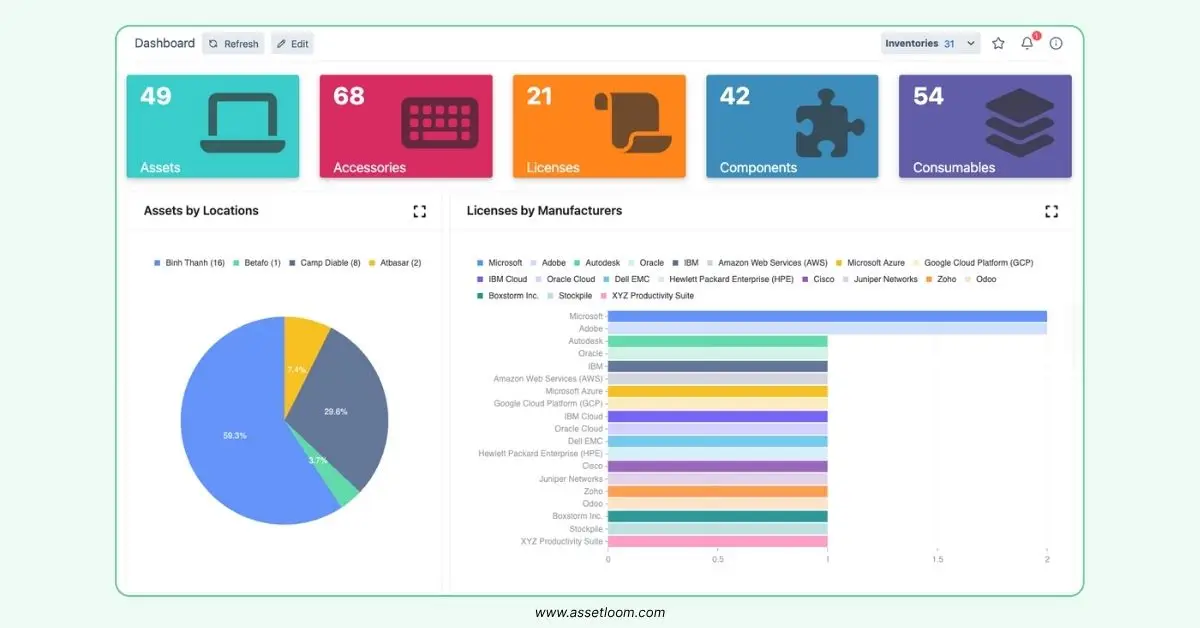
Modern ITAM tools also provide robust reporting and analytics capabilities for inventory tracking and equipment management, which is another area where traditional tracking spreadsheet templates fall short. The system comes with pre-built reports that track asset utilization, depreciation, maintenance history, and more. These reports are customizable and can be generated with just a few clicks, making it easy to gain insights into asset performance and lifecycle. Additionally, some ITAM solutions even offer predictive analytics, helping businesses forecast when assets may need maintenance or replacement, which helps to optimize resource allocation and reduce downtime.
Seamless Integration with Other Systems
Finally, unlike spreadsheets, modern ITAM tools integrate seamlessly with other business systems, such as procurement, finance, and maintenance management platforms. This integration ensures that asset data flows automatically between systems, reducing the need for manual data entry and eliminating the risk of discrepancies. Modern ITAM solutions provide a single source of truth for asset information, enabling businesses to track the full lifecycle of their assets — including equipment inventory and inventory tracking — from procurement to disposal, in one centralized system.
Conclusion
While the equipment tracking spreadsheet might have been sufficient for small businesses in the past, they are no longer adequate for managing the growing and evolving needs of modern asset management. The limitations of spreadsheets make them inefficient and error-prone tools for businesses that need to manage a large and complex asset portfolio. In contrast, modern ITAM solutions offer powerful features that address these shortcomings.
As businesses continue to scale, moving away from spreadsheets and adopting an ITAM solution is not just an improvement. It’s a necessity for staying competitive in a rapidly changing business environment.
Frequently Asked Questions
How do I know if my business has outgrown equipment tracking spreadsheets?
If updating your spreadsheet feels like a chore, or you’re constantly fixing errors and chasing missing data, it’s a clear sign. When multiple people need access, assets are spread across locations, or reports take hours to compile — it’s time to switch to a modern IT asset management (ITAM) system.
Are ITAM tools only for large organizations?
Not at all. While large enterprises benefit from scalability, small and mid-sized businesses also gain accuracy, time savings, and better visibility. Many ITAM solutions, like AssetLoom, offer flexible pricing or free plans to fit smaller teams that want to move beyond spreadsheets.
What’s the biggest advantage of using an ITAM solution over spreadsheets?
Automation and accuracy. ITAM systems update data in real time, send alerts for maintenance or warranty deadlines, and integrate with other tools. You get reliable insights without manual effort, something a spreadsheet just can’t deliver.